
Transitive Logic on the Gridiron
For a quick break from the drama surrounding the 2025 College Football Playoff selections, let’s take a lighter approach. By following chains of upsets, we explore how teams across the college football universe connected to the playoff quarterfinalists during the 2025 season.
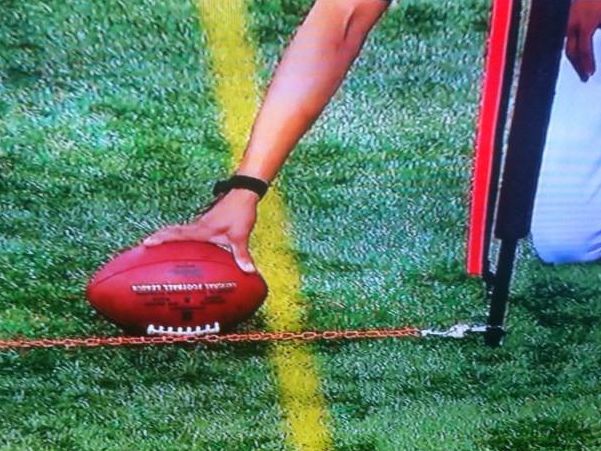
Chain, Chain, Chain of Transitive Losses
“I’m just a link in your chain.”
— Aretha Franklin, “Chain of Fools”
Applying transitive logic chains to college football is simple – at least on paper:
If Team A beats Team B, and Team B beats Team C, then Team A would transitively defeat Team C.
The College Football Playoff selection committee’s “formula” includes first-order transitive logic by comparing results against common opponents. But we will go way beyond the playoff field to the universe of 750+ college football teams, spanning the NCAA FBS to NAIA programs, and applying multi-order transitive logic. Our journey follows the chains of losses from the remaining playoff teams to the outer reaches of the college football universe.
These theoretical chains can quickly connect teams that can only be linked via transitive logic. The point isn’t to state who is “better”, but to have some fun with the sport’s chaotic web.
Bring Out the Chains
Let’s start our chain-building with the team that pulled off the biggest upset of the 2025 season, based on the Wolfe Ratings of all 750+ schools across the NCAA and NAIA: Webber International University (5-6).
They are a NAIA school with 800 students in Babson Park, FL. The Warriors shocked the Stetson University Hatters (3-9), an FCS school, 31-21, in their opening game. In the final Wolfe Ratings, Webber was 543 and Stetson 265.
That upset, along with others, built a sequence that linked the NAIA school with the quarterfinalists. The Warriors connect to playoff teams through transitive chains as short as 12 games, and a staggering rating difference of over 500 spots. Another opening-game upset in this chain was the Tarleton St Texans (12-2, FCS) of Stephenville, TX, beating the Army Black Knights (6-6, FBS) by a score of 30-27. Below is the 12-step chain from quarterfinalist Miami (FL) to Webber, including the final Wolfe ratings:
Miami → SMU (45) → TCU (33) → Kansas St (62) → Army (65) → Tarleton St (116) → Abilene Christian (143) → Southern Utah (170) → San Diego (179) → Marist (225) → Morehead St (230) → Stetson (265) → Webber International (543)
We can also connect other remaining playoff teams to Webber. The next chain starts with Alabama and links through another big upset, the Long Island University (LIU) Sharks (6-6, FCS) beating the Eastern Michigan University (EMU) Eagles (4-8, FBS), 28-23. That victory helps give us a 13-step chain from Alabama to Webber:
Alabama → Florida St (76) → Pittsburgh (42) → West Virginia (78) → Ohio U. (77) → Ball St (124) → Eastern Michigan (126) → LIU (190) → Stonehill (226) → Wagner (227) → Marist (225) → Morehead St (230) → Stetson (265) → Webber International (543)
Three other teams in the quarterfinals can be similarly connected to Webber: Texas Tech – 13 steps; Georgia – 14 steps; Ole Miss – 15 steps.
Taken to its most ridiculous extreme, these chains imply that Webber should beat playoff teams. But the real takeaway is that a few significant upsets can quickly send transitive logic racing far across the college football landscape.
Transitive Fun with 1-Win Teams
Next up are chains ending with a team’s only win of the year; they represent the farthest edge of our possible linkages. There are three FCS and one FBS school with one win that can be connected to playoff quarterfinalists in fewer than 12 games.
The Portland State Vikings (FCS) finished the 2025 campaign at 1–11. Their 10-step chain to Miami looks like this:
Miami → SMU (45) → TCU (33) → Kansas St (62) → Army (65) → Tarleton St (116) → Abilene Christian (143) → Southern Utah (170) → San Diego (179) → Cal Poly SLO (199) → Portland St (245)
The Northwestern State Demons, from Natchitoches, LA, were another one-win FCS school that had an 11-step chain to Miami. This chain also went through the Tarleton St upset of Army.
Our third one-win FCS school is the Murray State Racers, from Murray, KY, which had an 11-step chain with Texas Tech and Alabama. These chains were also a beneficiary of the LIU–EMU upset. Below is the chain starting with Texas Tech:
Texas Tech → Arizona St (26) → Houston (30) → West Virginia (78) → Ohio U. (77) → Ball St (124) → Eastern Michigan (126) → LIU (190) → Mercyhurst (215) → South Dakota St (147) → Indiana St (219) → Murray St (241)
The sole FBS school with one win and an 11-step chain was the Charlotte 49ers. They had 11-step chains with Alabama and Texas Tech; here is the path starting from Alabama:
Alabama → Florida St (76) → Pittsburgh (46) → West Virginia (78) → Ohio U. (77) → Ball St (124) → Eastern Michigan (126) → LIU (190) → Sacred Heart (169) → Villanova (129) → Monmouth NJ (161) → Charlotte (153)
The surprise isn’t that playoff teams connect to one-win teams, but how quickly the chains get there.
The Chaos Agents
An essential element in transitive chains is “connectors”; they quickly bridge far-flung clusters of teams into a cohesive web. We have highlighted how major upsets by Webber, Tarleton St, and LIU shaped those connections, by acting as pivotal nodes. Crossing competitive levels, from NAIA to FCS and FCS to FBS, they dramatically reduced the number of steps needed for the chains to travel far in the college football universe.
Another team that shows up repeatedly in chains is a blueblood program going through a tough stretch – Florida State University (FSU) Seminoles (5-7). But they started the season strong with an opening-game upset of Alabama, creating a critical bridge in the chains.
The West Virginia University Mountaineers (4-8), despite their subpar year, played spoiler with big upsets of Pitt (8-4) and Houston (9-3), making them a fixture in numerous chains.
These connectors reflect only a subset of chains but emphasize how just a few teams can build surprising transitive connections across all levels of college football.
Chains With No Links
You may have noticed that our transitive chains begin with only five of the eight remaining playoff teams. The dominance of the Big Ten’s top-tier: undefeated Indiana, and one-loss Ohio State and Oregon, whose only losses were to Indiana, means these schools do not produce transitive links to other programs. In a transitive college football world, having no links is a sign of dominance that stops the math.
The Fun is in the Connections
Unlike the playoff system, applying transitive logic to the college football season does not attempt to rank teams. Instead, it brings to life the sport’s fascinating web. Transitive logic playfully reminds us that in a season with hundreds of programs and thousands of games, far-flung teams can connect, even if they never meet on the gridiron.



 Tim Castelli
Leave a comment