
A Texas Native That Brings Beauty and Adaptability to the Landscape
Are you looking for a native shrub with an unmistakable flower, a feast for pollinators, and that is adaptable to a variety of soil conditions? The Buttonbush (Cephalanthus occidentalis) could be the plant for you.
Fireworks in Bloom
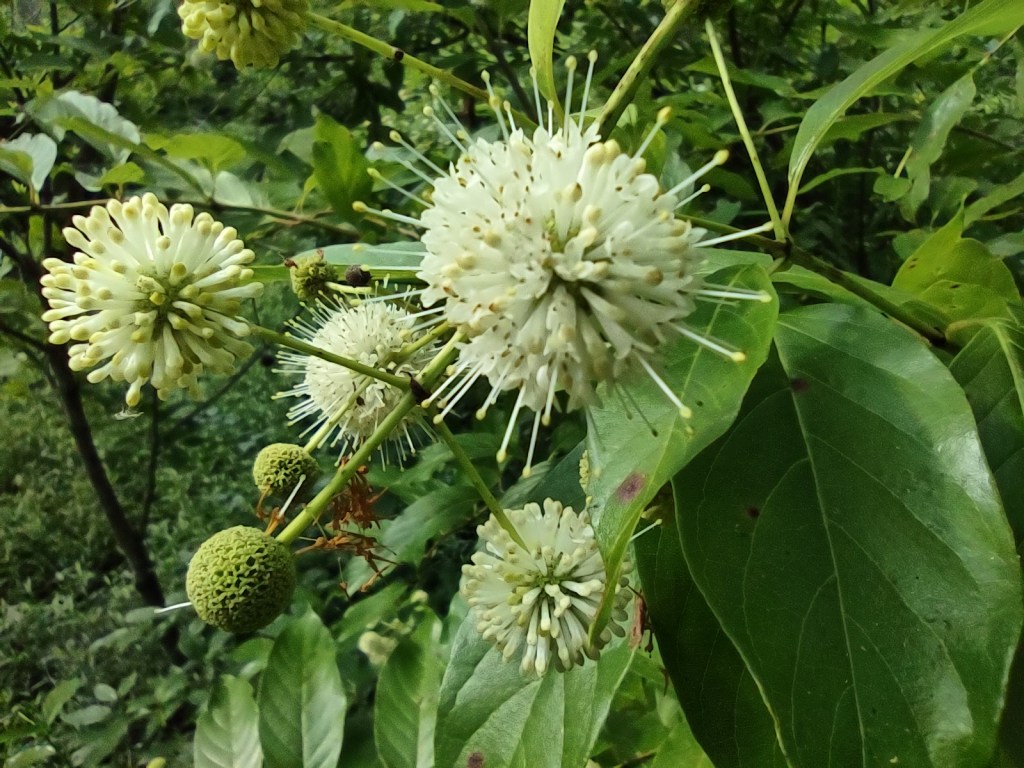
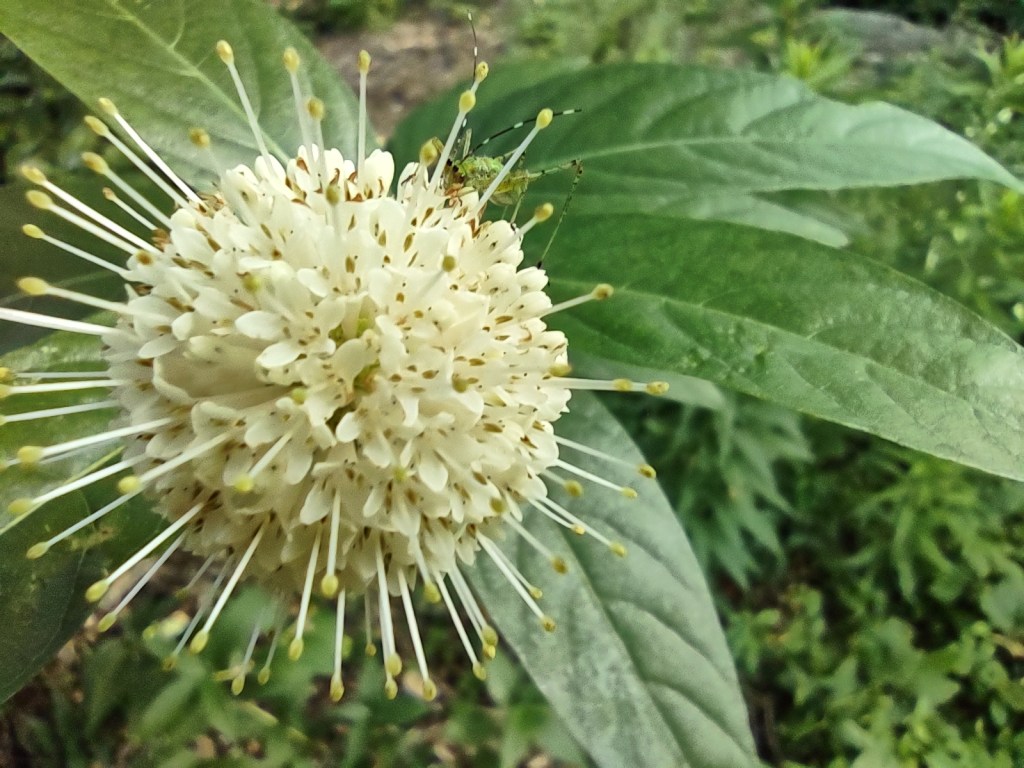
The scientific name provides a clue to the plant’s unique flower: Cephalanthus means “Head – flower”, referring to the cylindrical shape of the flowers. It has dramatic white flowers that look like living fireworks, with their pistils extending above the white corollas. The plant takes its common name from its button-like reddish-brown seed heads that develop after flowering. Seed heads can persist into fall and provide a food source for some ducks and shore birds.
Buttonbush blooms are not just beautiful; they are an important food source for many pollinators. In addition to bees and butterflies, Sphinx moths are a popular pollinator. The blooms are mildly fragrant and typically bloom from June to September in North Texas. With native landscapes often filled with flowering spikes, plumes, and disks, the distinctiveness of the Buttonbush flower and seed clusters makes it an ideal statement plant.
Native Range, Form, and Function
To understand why Buttonbush can perform so well in yards, it helps to understand where it grows naturally and how it develops in the wild.
- Native Range: Typically, in the wild, it is found along edges of creeks, ponds, and other areas prone to wetness. It is native to most of the eastern United States and parts of the west. In Texas, its range covers much of the state, except for the driest areas of the west.
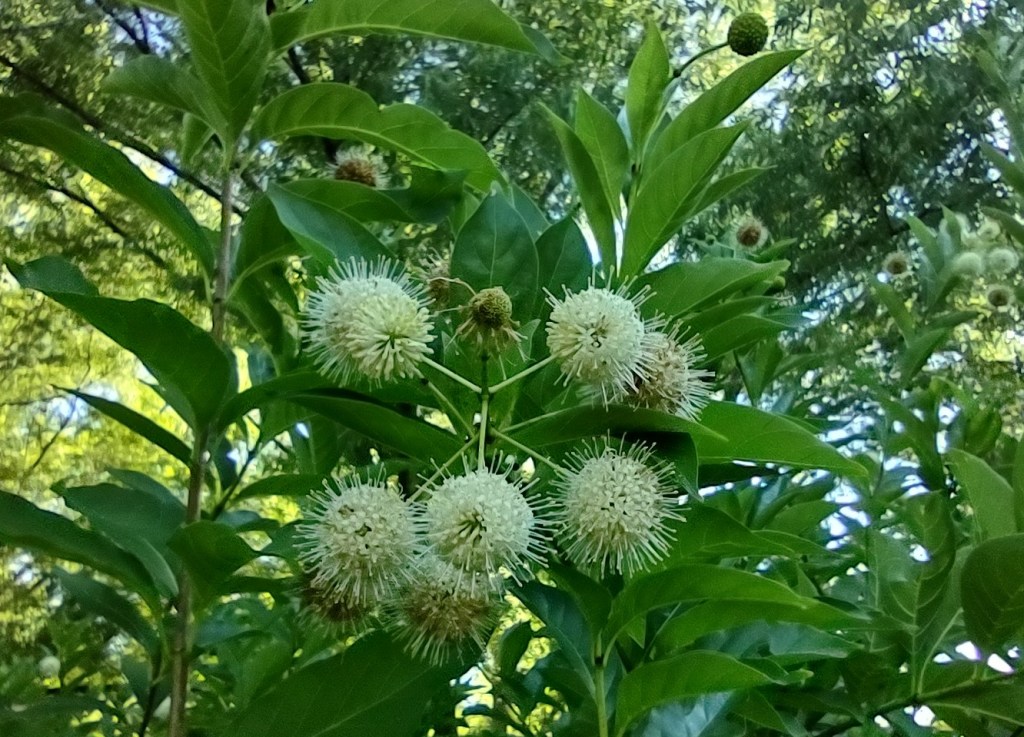
- Form and size: Buttonbush typically grows as a multi-stemmed shrub with an open, rounded, spreading crown. It usually reaches 6–12 feet tall and wide, though size can vary greatly with moisture levels. In wetter, richer soils, it can become quite robust; in drier sites, it may stay smaller and less dense.
- Leaves: The long and narrow leaves are a glossy dark green, usually arranged in pairs or threes, giving the plant a structured look.
- Growth habits: Hardy and relatively low maintenance, it can tolerate periodic flooding and heavier soils than many native shrubs. Once established, it can adapt to short dry spells.
- Wildlife Support: Buttonbush supports more than just insects. A mature buttonbush provides cover that benefits birds and other small wildlife. Plus, it is often a pioneer in flooded lowlands, colonizing areas with periodic inundation. Because of this, it is a popular choice for stabilizing banks and slowing erosion in wetland restoration projects.
Using Buttonbush in the Landscape
Unquestionably, the plant performs best in moist soils, but you do not need a pond, or a creek running through your yard to succeed. The Buttonbush is adaptable to less water, especially after its first couple of years. Its adaptability extends to sunlight; in Texas, it prefers partial to full shade. More sun can help with increased blooming, but it also likely means drier soil and the need for more occasional watering.
In your yard, Buttonbush will look and do best when given room to spread. Also, consider letting it keep a natural form rather than shearing it. If you need to contain it, a hard pruning in spring can be done. With its relaxed, intentional look, Cephalanthus occidentalis is at home in native gardens and naturalized edges. Best of all, when the flowers appear, you have a showpiece plant.
If your landscape does have a drainage ditch, low spot, rain garden, or pond edge, Buttonbush is an ideal plant for these often-challenging areas. It also helps stabilize the soil in these areas, reducing runoff damage. If you are looking to purchase the plant, in the spring and fall, it is often available at native plant sales.
A Resilient Native Worth Considering
Buttonbush is a native Texan, supports wildlife, and is well-suited to habitat restoration and naturalistic landscapes. As resilient and adaptable as it is beautiful. It can thrive beyond very wet conditions, making it an attractive choice for homeowners.
Originally published by the Native Plant Society of Texas.

 Tim Castelli
Leave a comment