
Igniting Your Landscape with Bold Fall Color
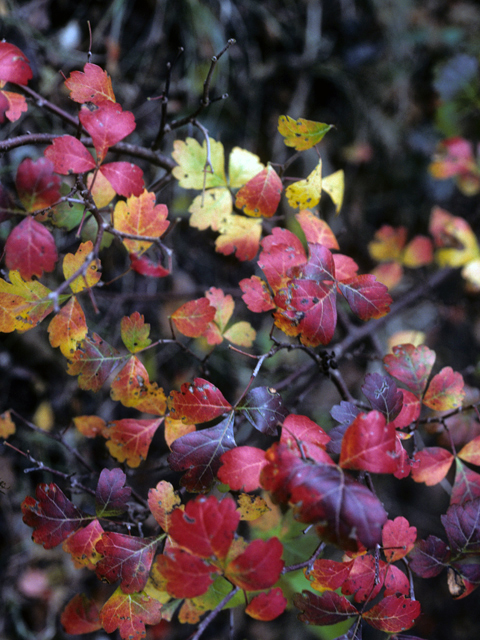
The Sumacs (Rhus spp.) found across North Texas and other areas of our great state include some of our more eye-catching fall color plants. Several can also serve as outstanding living privacy screens for native gardeners with some room to spare in their landscapes. By exploring the traits of our top choices, you can easily match the right species to your garden’s footprint and needs.
Red, by Any Name
The common name ‘sumac‘ traces back to an ancient Syriac word for ‘red,’ while the genus name, Rhus, stems from an Ancient Greek word that also means ‘red.’ True to their scientific and common names, they have vibrant red berry clusters in the fall alongside show-stopping leaf color.
Beyond their looks, sumacs are drought tolerant and valuable to wildlife, while their different growth habits offer gardeners a surprisingly wide range of landscape uses. Some spread readily to form colonies, while others are considerably better behaved. We will focus on four Texas native sumacs that offer particularly useful choices for native landscapes.
Four Native Sumacs for Texas Landscapes
Aromatic Sumac
(Rhus aromatica)

- Size: With natural suckering, it is a thicket-forming shrub, usually 6–12 feet tall and 4-6 feet wide.
- Growth Habit & Care: A naturally soft, irregular form that does not require severe pruning.
- Characteristics: Trifoliate leaves (three leaflets) with a spicy, citrusy scent when crushed. Very hardy and will tolerate shade better than most other Sumacs.
- Landscape Role: Ideal for natural privacy barriers, hiding a fence line or a high foundation.
- Fall Color: ★★★ [Attractive] – Subtle shades of yellow, orange, purple, and red.
- Aggressiveness: ★★☆ [Moderate] – A fast-growing, sprawling shrub.
- Availability: ★★★ [High] – Typically available at seasonal native plant sales, and native nurseries.
Evergreen Sumac
(Rhus virens)

- Size: Typically 8–12 feet tall and wide, develops into large shrub or occasionally small tree.
- Growth Habit & Care: Dense, rounded, and multi-trunked, with spreading branches. Grows in sun to part shade and prefers dry, rocky soils with good drainage.
- Characteristics: Thick, glossy, dark-green leaves give it a lush appearance uncommon among drought-tolerant Texas shrubs. Small white flowers appear from summer into fall, followed by clusters of fuzzy reddish fruit.
- Landscape Role: An outstanding privacy screen. Its dense foliage provides screening through winter.
- Fall Color: ★☆☆ [Minimal]. As an evergreen, it stays deep green, though new growth may have a bronze tint.
- Aggressiveness: ★☆☆ [Low] Unlike its cousins, Evergreen Sumac is better behaved and rarely forms aggressive thickets.
- Availability: ★☆☆ [Low]. It has become more popular in the state, but availability lower in North Texas.
Prairie Flameleaf Sumac
(Rhus lanceolata)

- Size: A small tree or large shrub reaching 15–20 feet tall and nearly as wide.
- Growth Habit & Care: Upright and spreading; adaptable and drought tolerant once established.
- Characteristics: Glossy, compound leaves and distinctive “wings”. Creamy-white summer flowers are followed by upright clusters of red fruit .
- Landscape Role: Excellent for a naturalized screen, large border, or informal hedge.
- Fall Color: ★★★[Spectacular] High-intensity reds, oranges, and purples.
- Aggressiveness: ★★☆ [Moderate to High] It spreads via rhizomes to form thickets if left unchecked.
- Availability: ★★☆ [Moderate] Available from some native-plant nurseries.
Smooth Sumac
(Rhus glabra)

- Size: Typically 6–12 feet tall and spreading, though mature plants can occasionally reach 15 feet or more.
- Growth Habit & Care: Open, spreading, and often leggy, with crooked stems and a broad crown. Fast-growing, drought tolerant, and best in full sun.
- Characteristics: Large leaves give it a bold texture. Female plants produce upright, pyramid-shaped clusters of fuzzy red fruit that can persist after the leaves drop.
- Landscape Role: Best suited to naturalized areas, large properties, prairie-style plantings, erosion control, and places where a spreading colony is desirable.
- Fall Color: ★★★ [Spectacular] Brilliant scarlet, red, and orange foliage.
- Aggressiveness: ★★★ [Very High] A vigorous colony-former that spreads through rhizomes and can steadily expand across open ground.
- Availability: ★★☆ [Moderate] Available from native-plant nurseries and plant sales.
The Right Sumac – The Right Place
Sumacs have plenty to offer Texans looking for a colorful, hardy native shrub, but matching the right species to your site is essential. Because their growth habits range from well-behaved, rounded bushes to vigorous, thicket-forming colonizers, selecting a sumac that fits your spatial constraints will save you significant maintenance down the road.
Whether your primary goal is winter screening, beautiful autumn foliage, wildlife support, or simply stabilizing a difficult slope, one of these native Sumac species is built for the job. Give these tough, adaptable plants enough space to stretch out, and they will reward your yard with year-round interest for seasons to come.
Originally published by the Native Plant Society of Texas.



Leave a Reply