How an unlikely combination of miscues, lucky bounces, and improvisational skill transformed mundane extra points into pure football magic
By Tim Castelli · September 9, 2026
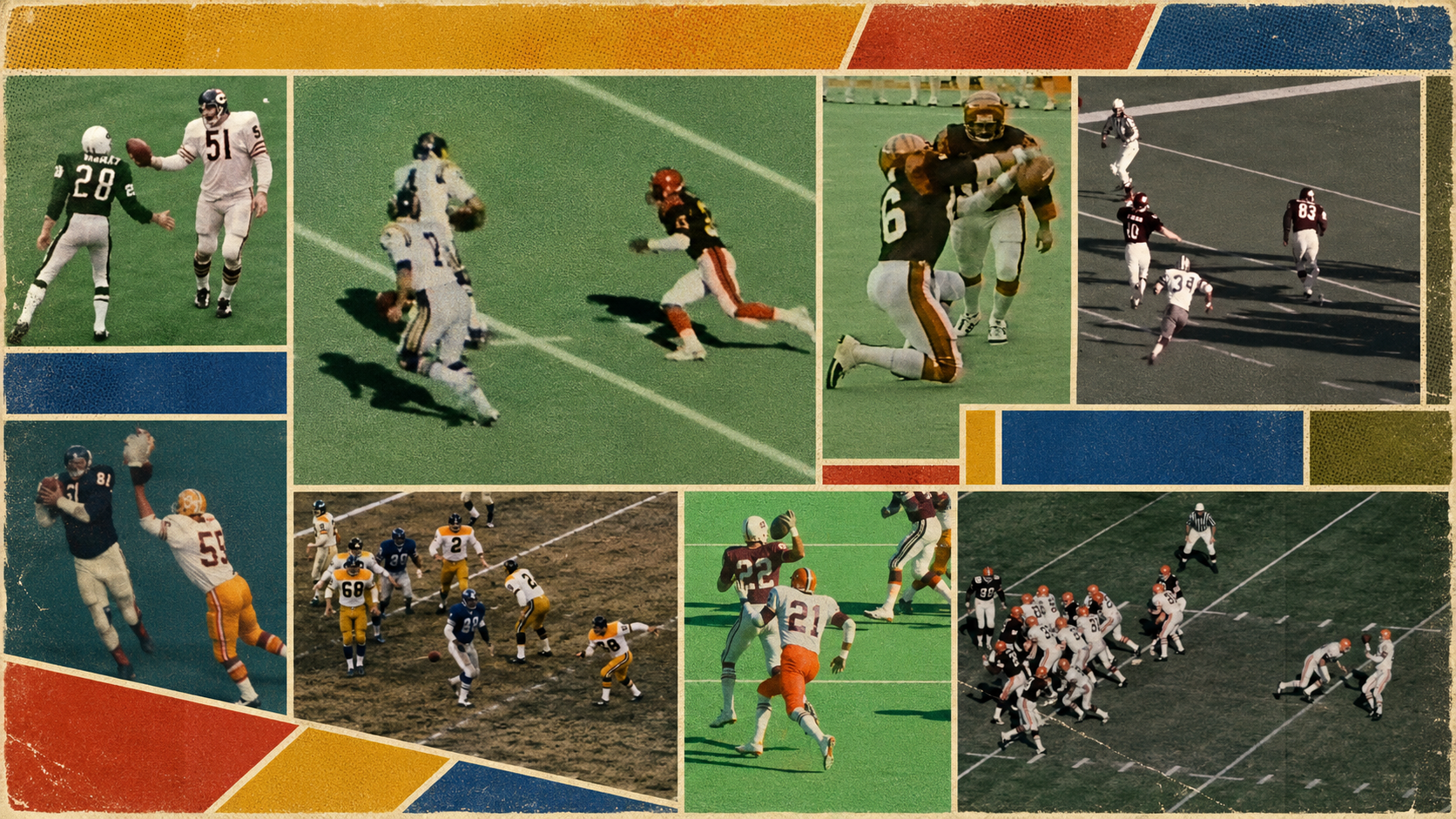
Content
The NFL once had a type of scoring play born not of design or clean execution, but from miscues and lucky bounces. Rule changes ultimately made this rare one-point conversion by run or pass obsolete, leaving it a forgotten relic of the game.
At first glance, this obscure play seems like little more than an amusing historical curiosity. But its history tells a bigger story: one shaped by changing rules, expanding rosters, and greater attention to special teams. The play offers an unexpected window into the broader evolution of the NFL in the latter half of the 20th century.
The “Singleton”
My interest in this play started long ago. Growing up, I loved watching NFL Films’ highlight shows and Football Follies, which seemed to always include Dick Butkus catching a pass for a single point after a conversion kick attempt went awry.
Recently, while rewatching one of those highlight shows, I heard something I had not picked up on before: legendary announcer Pat Summerall calling the play a “singleton”. I had never heard the term before, and it sparked my curiosity regarding the play’s history, frequency, and other notable moments.
In the days before the two-point conversion option, near-automatic kicks and the lack of additional reward meant running or passing plays were never planned. So, a successful one-point conversion via pass or run required a remarkable sequence of circumstances to occur:
- Initial Breakdown: A disasterous off-target snap or a flat-out drop by the holder instantly ends any chance of a kick. It can also stem from a shared error, where a snap was just off-center and not handled cleanly, disrupting the precise timing necessary for a successful kick.
- Lucky Break: Good fortune keeps the play alive as the holder or kicker capitalizes on a friendly bounce to swiftly corral the loose football, or the holder is able to cleanly snag an errant snap out of the air.
- Triumphant Recovery: Once the football is secured, the holder or kicker must then have the awareness and athletic ability to quickly decide whether to run for the conversion or find an eligible receiver for the score.
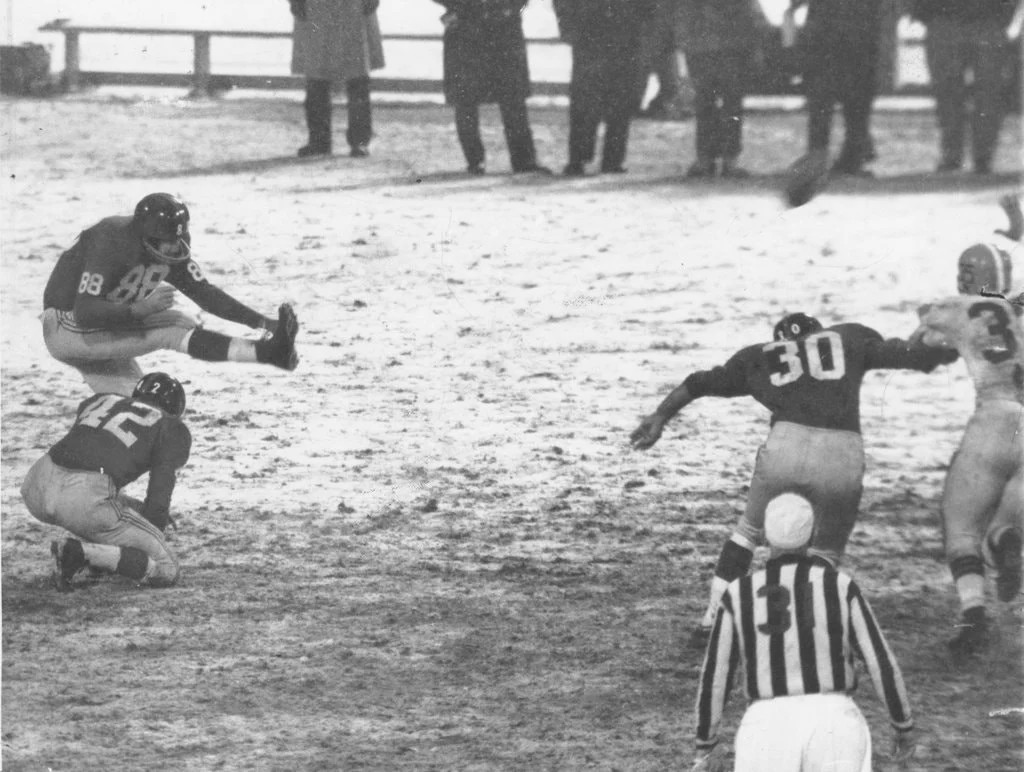
Summerall had a 10-year NFL career as a kicker and end. He made 261 extra-point kicks in his career, regular and postseason, but alas no meta singletons of his own.
The play was among the most entertaining in the NFL. It combined multiple unexpected actions: a rare, bad snap or dropped hold, the drama of the “fire” call, quick thinking across the unit, and sometimes the best part, players out of their normal role converting the breakdown into a scoring play.
What’s in a Name?
Initially, I assumed the term “singleton” was an informal or outdated name for the play. However, after an exhaustive search and confirmation from the Pro Football Hall of Fame, Summerall’s usage was not a term for the play. Instead, he was simply using a colloquialism for a single point.
In everyday usage, “singleton” was once used more frequently to describe a single instance in a variety of situations. For example, a 1976 article in The Sporting News noted that the Chargers had in the upcoming player draft, “…singleton picks in the first and second rounds…”. Outside the gridiron, the word had a wide range of applications, including references to a single person, a single birth, or a single suit in cards. Essentially, Summerall’s usage was similiar to him calling a safety a “deuce”.
It may not be part of official NFL terminology, but singleton is the perfect moniker, reflecting both the outcome and oddity of the play.
Defining the Era
Our analysis begins long after the NFL’s formation in 1920, with a scope starting in the 1950 season because:
- Unlimited free substitution was made permanent in 1950, opening the gates for two-platoon football and specialization.
- The NFL’s merger with the All-America Football Conference (AAFC) in 1950 added the Baltimore Colts, Cleveland Browns, and San Francisco 49ers, resulting in a 13-team league. The original Colts folded after a year, but the other two teams, with integrated rosters, led the push to modernize the NFL.
- Improvements in kicking made it a more reliable option for the conversion than a designed run or pass. The NFL’s extra-point success rate improved from 67.3% in 1932 (the first year records were kept) to 94.4% in 1949.
Led by head coach Paul Brown, one of the sport’s greatest innovators, Cleveland won all four AAFC titles in 1946-1949, then continued their dominance in the NFL, winning the 1950 championship.
Our scope spans 44 seasons, ending in 1993 due to the introduction of the two-point conversion option in the 1994 season. (Note: Prior to its merger with the NFL, the American Football League (AFL) used a two-point conversion from 1960 to 1969; these conversions are excluded from this analysis.)
Evolution of the Try
Through 1994, the NFL made a handful of impactful rule changes affecting points after touchdown (PATs). These changes shaped the mechanics and the strategies teams utilized. Below is a brief timeline of the significant rule changes governing a “Try”, the NFL’s official name, which harkens back to rugby football in the 19th century:
- 1920 – At the NFL’s inception, the league followed the NCAA rules. The “Kick After Touchdown” rules were quite different: “…any player of the side scoring the touchdown may bring the ball out from behind the opponents’ goal line to any point in front of the opponents’ goal. After indicating to the Referee the spot of his selection…a try at goal may be made from that spot.”
- 1929 – Mirroring the NCAA rule change, the NFL moved the spot of the try-for-point-after-touchdown to the two-yard line.
- 1933 – The NFL first developed its own rules separate from those of colleges. Among the changes were moving the goalposts from the end line (back of the end zone) up to the goal line and introducing hash marks.
- 1974 – Goalposts were moved again, from the goal line back to the end line. This change was implemented to increase the difficulty of PATs and field goals, and improve player safety by moving the goalposts out of the end zone. Conversion kicks were now typically from 20 yards, instead of 10 yards.
- 1994 – Introduction of the two-point conversion option, ending the singleton era.
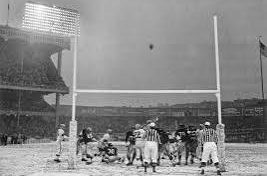
In Search of Singletons
To capture the singletons from the 1950–1993 NFL seasons required research and analysis beyond standard league statistics. These plays are lumped together with traditional conversion kicks in NFL scorekeeping, so capturing them necessitated additional filtering and review.
- Downloaded 33,701 NFL touchdowns (excluding AFL scores), covering the 1950 – 1993 seasons, including the postseason, from Pro Football Reference.
- Filtered conversion descriptions to identify those not recorded as kicks.
- Confirmed all occurrences by checking newspaper accounts of each game.
Given the unusual nature of the play and the era’s inconsistent recordkeeping, it was not surprising that, during unrelated research for this article, a misclassified singleton was uncovered. This prompted additional targeted searches, including Pro Football Reference queries, selective sampling of newspaper game accounts, and informal reviews of game logs. This thorough review discovered no additional singletons, confirming that this dataset is statistically representative of the play’s actual frequency, which we will return to later in this article.
The Singletonians: From Legends to Unlikely Heroes
Based on available historical play-by-play data, there were 45 documented singletons during NFL regular-season and postseason play between 1950 and 1993 (excluding the AFL across 1960-1969). A full listing of all verified singletons is available in our companion spreadsheet.
The fraternity of “Singletonians” encompasses 49 players who scored via a run or reception, as well as the players who threw for the conversion. Below are highlights from the most notable singletons that took place within this timeframe, categorized by Hall of Famers, repeat performers, and other noteworthy players. (Note: all statistics include regular-season and playoff games).
Hall of Famers
Four Canton inductees were involved in seven singletons. These players were on the placekicking unit for multiple reasons: two were holders because of their excellent hands, one was a quarterback / kicker, and the other was likely nearly as proficient at blocking as he was at tackling.
George Blanda
In a career that spanned an amazing 26 years, George Blanda was a signal-caller and kicker for the Bears, Oilers, and Raiders. Including his years in the AFL, he made 992 extra points with a 98.4% success rate, along with 243 touchdown passes. Blanda is the only player with 500+ extra points and 200+ touchdown passes in his career. Just three players have 100+ extra points and 100+ touchdown passes.
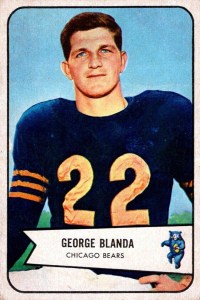
October 10, 1954
A record downpour of four inches of rain had transformed Wrigley Field into a soggy mess before Chicago’s game against Baltimore even kicked off. . In the second quarter of the Bears’ eventual 28-9 victory, Chicago’s Bones Weatherly blocked a punt and recovered in the end zone. Blanda lined up for the extra point, but a bad snap forced him to scramble for his lone singleton. As The Baltimore Sun colorfully described, “Blanda… never had a chance to boot this one. The pass from center came slithering back on the ground, but George picked it up, eluded one charging lineman and scooted around left end, sliding into pay dirt to end the scoring for the half.”
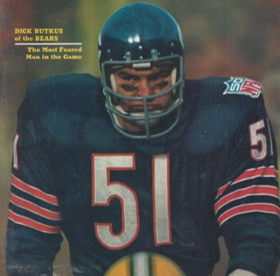
Dick Butkus
Next up is the player that sparked my interest in the play: Dick Butkus, who played for Chicago from 1965 to 1973. In the 21st-century NFL, putting your star linebacker, who fought through injuries in the second half of his career, on the placekicking unit seems absurd. But with the smaller rosters, it was common for players like Butkus to play on special teams. Blocking was not new to Butkus; at the University of Illinois, he was a star two-way player, a center on offense and linebacker on defense. He was involved in two singletons just over a year apart under similar circumstances, a feat that makes him the only non-holder in the multi-singleton club.
Roster Growth: In 1950, team rosters were limited to 33 for most of the season. Rosters gradually rose over the ensuing years and by 1965 they were up to 40. Further increases eventually lifted the limit to 45 in 1978, where they stayed for the most part through 1993.
November 14, 1971
Late in the fourth quarter of Chicago’s game against Washington at Soldier Field, a PAT miscue became Butkus’ most memorable play in his storied career. Though the game was unseasonably warm (70°F) and breezy, the wind was not a significant factor, as the teams’ kickers combined to make 8 of 11 field goals. A Cyril Pinder 40-yard touchdown run, the only touchdown of the game, tied the score at 15-15. On the extra point, an errant snap flew over the head of the holder, Bobby Douglass. The quarterback gathered it up at the 20-yard line, deftly evaded several defenders as he drifted left and back to near the 27-yard line, and launched a pass to Butkus, who was lined up as an eligible end. Butkus made a difficult over-the-shoulder catch in the end zone for the winning point in Chicago’s 16-15 victory. Of the 45 games featuring a singleton, it was the only one that occurred late in the fourth quarter, was the final point scored, and proved to be the margin of victory.
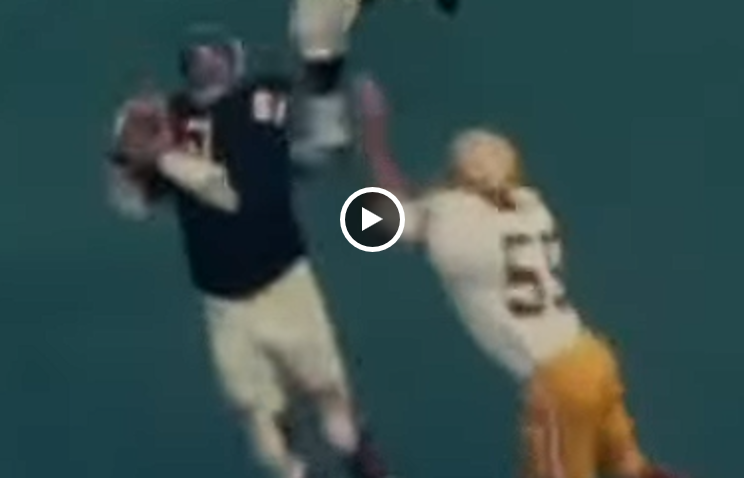
After he fell to the turf, Butkus fired the ball skyward while lying on the ground. Butkus said afterward, “I’ve never scored on a screwier play. When I saw Bobby scrambling, I just headed for the endzone figuring the only way we could score would be on the pass.”
Douglass’ recollection neatly summed up the combination of luck and execution necessary for all singletons, “Once I recovered the ball I saw two guys out there. Butkus was deep, behind Willie Holman (the other eligible end on the left side) so I threw it to Dick. We were lucky on it. The snap was high. It was lucky, sure, but you have to do the right thing even when you get lucky. It wouldn’t have meant a thing if Butkus hadn’t caught the ball.”
December 10, 1972
Just over one year later, a “worm-burner” snap went past Douglass, who tracked it down around the 20-yard line and rolled left to hit a wide-open Butkus in the end zone. Chicago’s decision to position Butkus at left end suggests he was the primary receiving option on a broken play, since the southpaw Douglass’ tendency would be to roll out to his left.
The fourth-quarter conversion was the final point in the Bears’ 21-12 win over the Eagles at Veterans Stadium. This was the memorable play that Summerall described as a “singleton”.
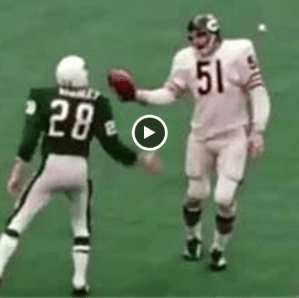
Butkus was never afraid to taunt opposing players. Right after his catch, he crossed paths with Eagles Pro Bowl safety Bill Bradley. Known as “Super Bill”, Bradley was a former University of Texas quarterback turned All-Pro defensive back known for his intense competitiveness.
As Bradley walked past, Butkus magnanimously presented the ball to him, which Bradley proceeded to slap out of his hands and send the ball flying. Bradley recalled the brief conversation he had with Butkus. “Butkus said to me, ‘How do you like that, you son of a bitch? What do you think about that?’ When Butkus stuck the ball out to me, I didn’t say too much to him. I just slapped the ball out of his hand and said, ‘That’s what I think about it.’”
Roger Wehrli
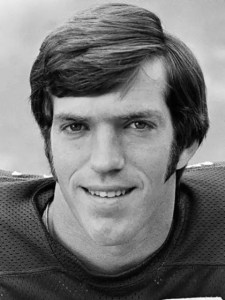
A cornerback, Roger Wehrli had a 14-year career (1969-1982), all with St. Louis. He took over the holding duties after another Cardinals’ Hall of Fame defensive back, Larry Wilson, retired in 1972. A five-time All-Pro selection and seven-time Pro Bowler, he amassed 41 interceptions in his career. Before the relatively recent switch to punters handling holding duties, it was common for skill-position players considered to have the best hands on the team to be the holder. Wehrli was involved in singletons as both a runner and passer.
December 14, 1975
On a rainy and windy day at Soldier Field, the Cardinals drubbed the Bears 34-20, with Wehrli’s scoring on St. Louis’ opening possession. According to the St. Louis Post-Dispatch, the usually sure-handed Wehrli dropped the snap and ran in for the singleton.
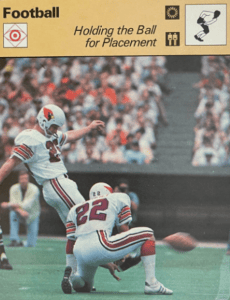
1978 Sportscaster Set card; Wehrli holding for Jim Bakken
October 28, 1979
Four seasons later, on a beautiful autumn day in St. Louis, Wehrli was involved in another singleton, this time as a passer. Although newspaper accounts of the second-quarter play incorrectly stated the snap “sailed over” his head, video of the play shows that Wehrli could not reel in a difficult but catchable snap. After a fortunate bounce and deftly avoiding a defender, the “crafty veteran kept his head” and continued rolling out toward the left sideline, and lofted a pass to Gary Parris, a tight end, in the corner of the end zone for the one-pointer. The Cardinals lost to the Browns, 38-20.
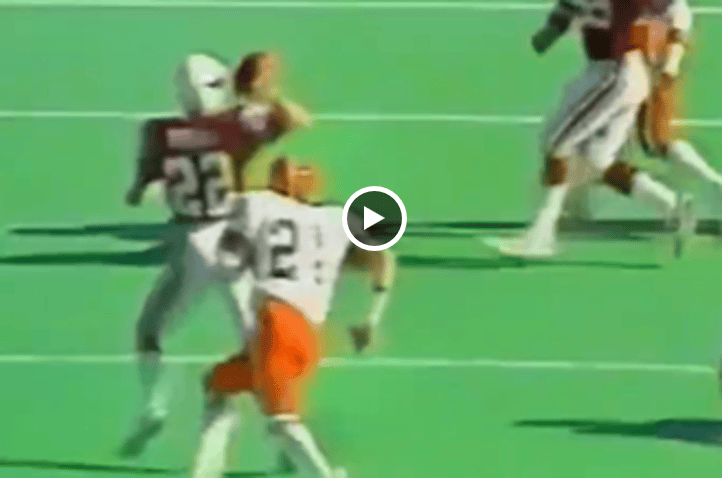
Steve Largent
During his record-setting career (1976-1989) as a wide receiver for Seattle, Steve Largent was also the Seahawk’s holder for his final five seasons. He was a three-time All-Pro and seven-time Pro Bowl selection. Known more for his stellar hands and disciplined routes than his speed, Largent was the first Seahawk named to the Hall of Fame. A model of consistency, he missed only four games in his career and, when he retired, held the record for most consecutive games with a reception (177). Largent was involved in two singletons during his tenure as a holder.
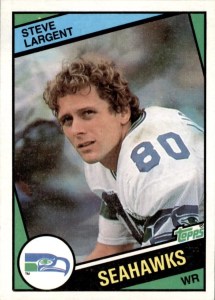
October 13, 1985
In the third quarter of a game against the Falcons at the Kingdome, Largent ironically dropped a good snap on the extra point. But he immediately picked it up and scrambled around the left side, barely crossing the goal line for the singleton. On the broadcast, Dan Dierdorf, in the play-by-play role, mistakenly said the kick was blocked. The close play would undoubtedly have triggered a modern replay review. Largent did not drop much else that day, catching 8 passes for 103 yards in the Seahawks’ 30-26 victory.
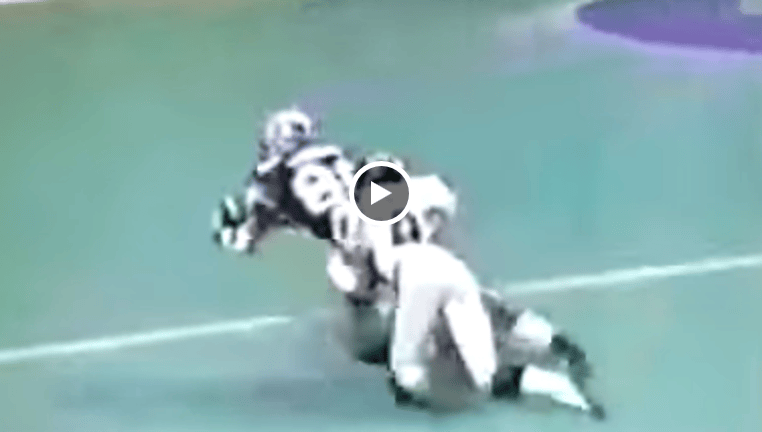
Lost in the Box Score: The Largent singleton in October 1985 highlights the inconsistent scorekeeping for the play. The Pro Football Reference download listed it as “kick succeeded” in the Conversion field. The site’s game summary showed Largent with the PAT in both the box score and play-by-play, but some newspapers still listed it as a kick. In fact, it was unusual to find a singleton that was accurately recorded across all official box scores, game logs, and local newspaper accounts.
December 4, 1989
Nearing the end of his career, Largent scored his second singleton during the first quarter of a game against the Bills in Seattle. He could not cleanly handle the low snap from Grant Feasel but was able to secure it and again ran around the left end for the singleton. It ultimately accounted for the winning margin in a 17-16 Seahawks win. Al Michaels, calling the game on “Monday Night Football” alongside Frank Gifford and Dierdorf, recognized the moment immediately, noting it was Largent’s second PAT via a run.

1) Snap goes awry; 2) Largent aborts; 3) Scrambles left; 4) Outraces defenders for the singleton. ▶ Watch the play.
Players with Multiple Singletons
In addition to Butkus, Wehrli, and Largent, six other players were involved in multiple singletons, either scoring or passing. Remarkably, nearly half of all singletons (20 of 45) were produced by a group representing less than one-fifth of all players (9 of 49). Given the play’s rarity, it is surprising to have such a concentration among relatively few players, and we will explore possible explanations later in the article.
While the players in the following sections are not in Canton, many were very accomplished. Five players from the Pro Football Researchers Association’s (PFRA) Hall of Very Good are included in the listing: Frankie Albert, Charlie Conerly, Andy Russell, Dan Reeves, and Nolan Cromwell.
Frankie Albert
The lone exception to the singleton being a play born of chaos was Frankie Albert. After a stellar career at Stanford and four years in the military, the diminutive Albert was a quarterback with the 49ers between 1946 and 1952. One of the first left-handed quarterbacks, he made the NFL Pro Bowl in 1950 and was AAFC second-team All-Pro in 1946, 1947, and 1949. Albert was known for a freewheeling style and was an originator of the bootleg. His deft ball-handling was reminiscent of a point guard in basketball.
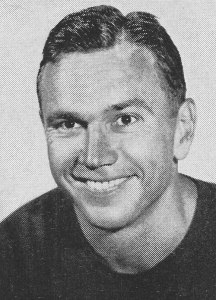
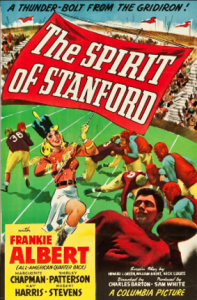
Albert’s college days at Stanford University were remarkable. Following a one-win season in 1939, he led an epic turnaround in 1940, guiding the team to an unbeaten record, a Rose Bowl victory, and earning All-American honors. His exploits were so famous they inspired a 1942 semi-fictionalized movie, “The Spirit of Stanford”. The movie’s amateurish acting is difficult to watch, but it features extended actual game footage of Albert in action, starting around the 47-minute mark.
Albert’s flair for improvisation included freelancing as the holder on conversions.Without the kicker or others on the kicking team knowing it, he would ad-lib out of a kick to throw a pass to an end. It was especially curious since the 49ers’ kickers during his career, Joe Vetrano and Gordie Soltau, were reliable on PATs – Vetrano made 92.4% of his conversions in 1946-1949, and Soltau was 93.8% in 1950-1952.
Soltau recalled Albert’s improvisational style in a video tribute for Albert’s’ induction into the San Jose Sports Hall of Fame: “I saw the ball got snapped and he caught it, and I was moving up to kick it, and when I got there, the ball wasn’t there, he had picked it up…”.
Y.A. Tittle, who shared the 49ers’ QB1 role with Albert in 1951 and 1952, also discussed Albert’s style and his propensity to improvise extra points in his 1964 autobiography, “I Pass!”.
“What struck me most about Albert was his off-the-cuff approach to football. He had fun playing the game. He made it fun for us too. Frankie could always be expected to do the unexpected…
One of them was throwing passes for extra points.This mind you, when all the time we have Gordie Soltau, one of the best place kickers in pro ball. That didn’t faze Frankie. He would get down there to hold for Soltau on the conversion try. Then he’d straighten up and lob the ball to a defensive end or somebody and the guy would run it in for the point after touchdown.
It never made much sense. Soltau was a sure thing for the extra point. The defensive end wasn’t a good risk to catch the ball. Still, this was Albert’s way of having fun and making us enjoy football.
There was a method to Frankie’s showmanship too. Those little lob passes for the extra point rubbed salt into the wounded pride of the other ball team. It was bad enough getting scored against, but to have this little lefthander toss the ball in for the extra point was kind of humiliating. Albert was aware of this, and he used his trickery to full advantage.”
An additional motivation behind Albert’s improvisations was likely a desire to please the fans. The San Francisco Chronicle noted about his 1950 conversion, “This time Cutie Albert, faking the kick conversion, passed to End Jack Nix for the extra point and the fans loved it.”
Even though our research begins in 1950 after the NFL’s merger with the AAFC, Albert used the play even more frequently prior to that. He tallied seven singletons (six passes and one run) from 1946 to 1949. Unfortunately, no film of Albert’s conversion passes between 1950 and 1952 was found, but videos of two late-1940s extra-point connections are available:
- October 27, 1946 vs Cleveland Browns: Albert passes to Ed Balatti for a successful conversion.
- September 19, 1948 vs Los Angeles Dons: Pass to Ned Maloney for the extra point.
Albert’s singletons represent a gray area for inclusion, since the plays were not born of a miscue. But because they were not designed plays, essentially “two-man audibles” with even the kicker unaware of his plans, we are including them in the listing. He helped account for three singletons via the air across 1950 – 1952.
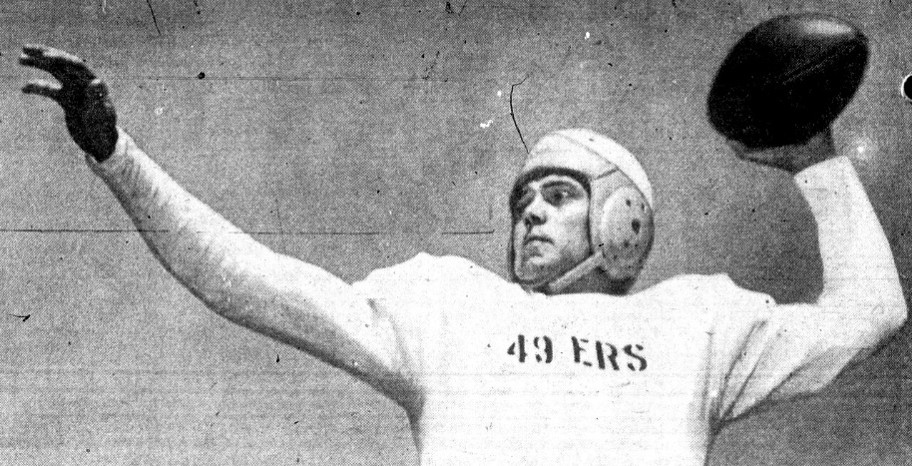
December 10, 1950
Albert’s pass to Jack Nix was the first singleton within the scope of our research. It came in the second quarter of the season finale, which was also the last game of Nix’s brief NFL career. According to Nix’s daughter, Cindy Nix Bell, before the extra point, “Frankie leaned in and said [to my dad], ‘This one’s to you, Nix; you’ve earned it!’”
Albert did as Tittle described above: on a good snap, he picked up the hold and threw to Nix in the end zone. The score increased San Francisco’s lead to 24-7 over Green Bay, and they went on to win 30-14 at Kezar Stadium. Nix was a wide receiver, and it would be the only point he scored in his nine-game NFL career.
In 1951, Nix sought more money north of the border and played for the Saskatchewan Roughriders of the Canadian Football League. He then enlisted in the Marines during the Korean War. But in 1952, a severe knee injury while playing for the Quantico Marines Devil Dogs ended his playing career.
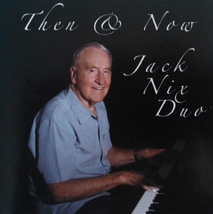
Subsequently, he joined an NFL program that encouraged former players to become officials, working games from 1958 to 1967. A true renaissance man, he was also an accomplished jazz pianist, who went on to perform as the Jack Nix Duo, and releasing an album Then & Now in 2013.
December 9, 1951
Albert’s next singleton, one year later, was also done in his typical fashion. The recipient this time was Gail Bruce, a defensive end who played for San Francisco in 1948-1951. Harry Borba of the San Francisco Examiner wrote that Bruce “has been itching all year to do something offensive”. Albert obliged him late in the fourth quarter of a 31-19 triumph, again at home against a woeful Green Bay squad. With the outcome secured, the unnecessary pass illustrated Tittle’s insight that Albert’s trickery was about “making us enjoy football” while it also “rubbed salt into the wounded pride” of the Packers.
When the Vallejo Times-Herald asked the diminutive field general after the game about why he threw for the conversion in the fourth quarter, Albert deadpanned, “I guess we did it just for kicks.”
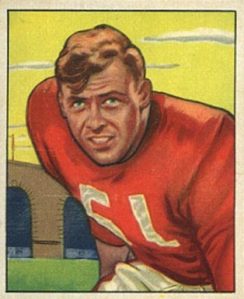
October 5, 1952
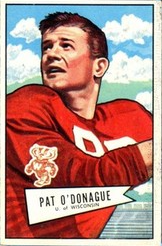
Pat O’Donahue, also a defensive end, with a career lasting only 20 games, was Albert’s last singleton target. Wire service reports describe Albert throwing a pass to him with San Francisco leading 36-7 against the Dallas Texans in the fourth quarter at the Cotton Bowl. Although the brief mention offered no further details about the play, the circumstances appear similar to the two earlier conversions – an improvised Albert pass with the 49ers holding a big lead late in the game.
Charlie Conerly
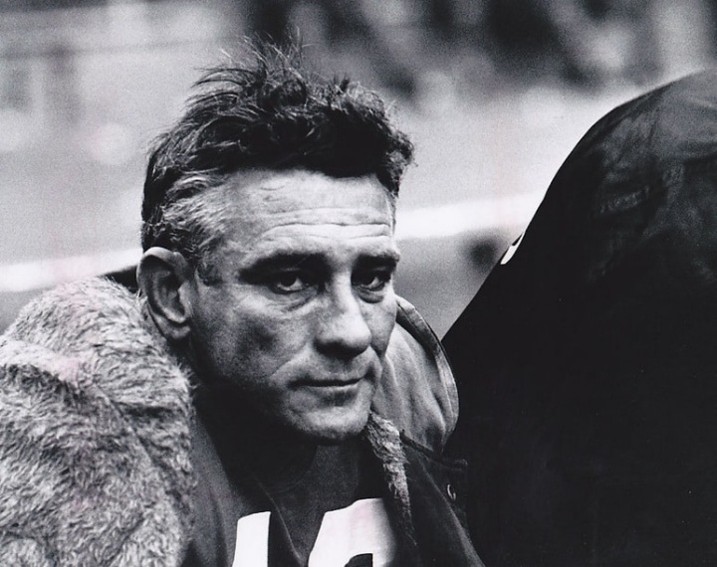
A quarterback and “Marlboro Man”, Charlie Conerly spent his entire 14-year career (1948-1961) with the New York Giants. Coming out of high school, he signed with Ole Miss in 1941 but due to World War II, he enlisted with the Marines in 1942 and reached the rank of sergeant. Returning from the military, he promptly transitioned back to football with the Rebels in 1946 and earned All-American honors in 1947.
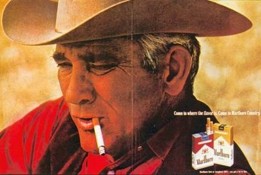
Frequently described as a “coach on the field”, Conerly was already 27 as a rookie due to his military service, often leaving him closer in age to coaches than to teammates. He was a Pro Bowler in 1950 and 1956, and MVP in 1959. As a starter, he helped the Giants win the NFL championship in 1956 and finish as runner-up in 1958 and 1959. Having played in a run-heavy era, he is considered by many to be overlooked for the Pro Football Hall of Fame.
Conerly was the holder for New York throughout his career and ran in three extra points in a two-year period, the only singletons over that span. Inexplicably, each was the result of defensive encroachment, and in the confusion, Conerly just got up and ran in for the conversion.
October 19, 1952
Only two weeks after Albert’s last singleton, Conerly ran in his first during the third quarter of a 24-23 home-opening loss to the Chicago Cardinals. In the only known footage of his singletons, the Cardinals encroach on the extra point, allowing Conerly to easily scamper around right end for the score. On the play, three Cardinals jump the snap in unison, reaching Conerly practically at the same time as the ball arrives, suggesting he may have used a hard count. We will explore this and other theories later in this section.
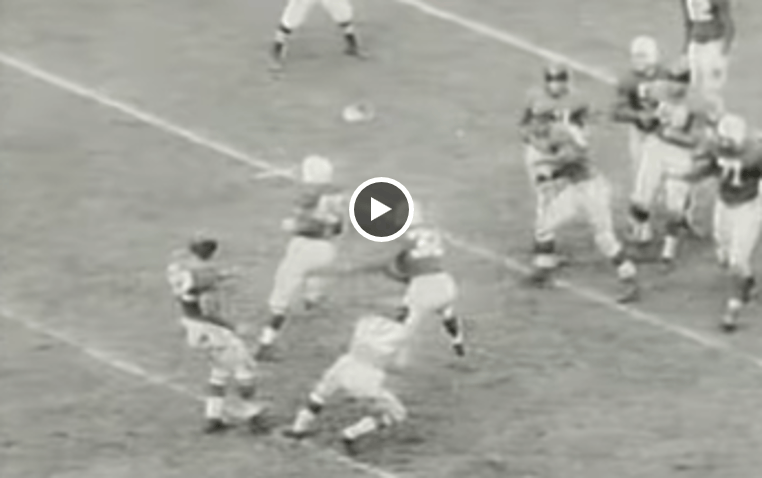
November 23, 1952
Five weeks later, like the earlier game, Conerly again ran in over the right side after the Redskins encroached on the extra point in the third quarter of the Giants’ 14-10 road win. It was a rare bright spot on a dismal day for Conerly, as he was given an early hook after going 2 of 6 for 9 yards and an interception in the first half.
October 10, 1954
Two years later, on the same day as Blanda’s conversion run, Conerly’s third singleton unfolded in the fourth quarter of the Giants’ lopsided 51-21 win over the Redskins, also at Griffith Stadium. It was an identical situation to his earlier instances, as Giants kicker Ben Agajanian recounted, “I batted 100 per cent – 3 for 3 in field goals and five conversions in a row. One conversion the Redskins were way offside, so Chuck Conerly just ran it over.” Conerly also had a very productive day at quarterback, going 17 of 34 for 237 yards and 4 passing touchdowns, tying the Giants record.
Later that season, the well-traveled Agajanian praised Conerly’s holding, “He’s the best I’ve ever had, and the big reason why I’ve been doing so well with the Giants.”
Conerly Footnote: For good measure, in 1955 Conerly added a conversion kick to his resume. In the fourth quarter of a blowout win over Washington, he requested and received permission from head coach Jim Lee Howell to kick the extra point, with kicker Ben Agajanian serving as holder. Regarding the kick, the Yonkers Herald Statesman noted, “He barely made it.”
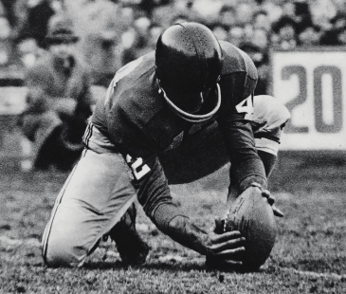
Together, these three identical plays reveal an astounding statistical truth: in a 44-season span, out of thousands of PATs and dozens of singletons, a conversion triggered by defensive encroachment happened only three times, and all three belonged to Conerly.
There were no rule changes involving defensive encroachment until late in the singleton era. Despite extensive research, nothing definitive explains why Conerly’s runs occurred under the same circumstances. Below are some theories:
- Hard Count: Although no evidence was found from Conerly, teammates, coaches, or writers on his tactic, the video suggests he possibly used his quarterbacking cadence skills to trigger the defense.
- Free-Play IQ: Another possibility, building on a suggestion in a PFRA forum, is that Conerly happened to get multiple opportunities and took advantage of them, recognizing that a flag gave him a risk-free chance to score.
- Statistical Randomness: Occam’s Razor, the idea that the simplest explanation is often the best, provides another possibility: Conerly’s scores were just part of the statistical randomness of singletons, as we will discuss later in the article. His three runs happened in a two-year burst in the middle of his career, starting in his fifth season, and never took place over the last half of his 14-year career.
Hopefully, a definitive explanation will emerge for why Conerly’s curious streak of singletons happened in rapid succession before disappearing. But until then, it remains an intriguing mystery.
Bobby Douglass
Far less adept at passing than the previous two quarterbacks, Bobby Douglass finished his career with a 43% completion rate and a passer rating of 48.5. But the southpaw was exceptional as a runner. In 1972, Douglass nearly became the first quarterback to rush for 1,000 yards in a season, finishing 32 yards short. In addition to playing for Chicago from 1969 to 1975, he ended his career with short stints in San Diego, New Orleans, and Green Bay, retiring in 1978.
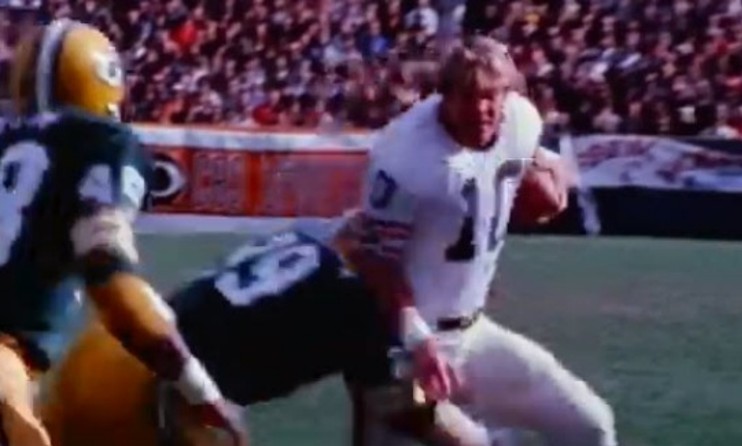
Douglass is another three-timer; his conversion passes to Butkus in 1971 and 1972 were discussed earlier, plus he ran one in himself in 1971, just two weeks before his first toss to Butkus. Remarkably, Douglass’ multiple singletons came only during a three-year stretch, 1971-1973, as the Bears’ regular holder.
October 31, 1971
On Halloween, Douglass’ conversion run took place in a noteworthy game against Dallas at Soldier Field. In the fourth quarter, after Douglass had thrown a 28-yard touchdown pass to wide receiver Dick Gordon, the ensuing PAT snap skipped back to him. With the timing of the kick thrown off, he scooped it up and took off toward the left side. Repeatedly faking a pass, he outran the defense to the pylon. Douglass’ singleton increased the Bears’ lead to 23-12, leading to an eventual 23-19 victory.
Chicago’s starting center, Rich Coady, as was the norm at the time, was also the long-snapper. He struggled all day, especially on punts with multiple errant snaps, including one that led to a safety. This was his only bad exchange on a field goal or extra point.
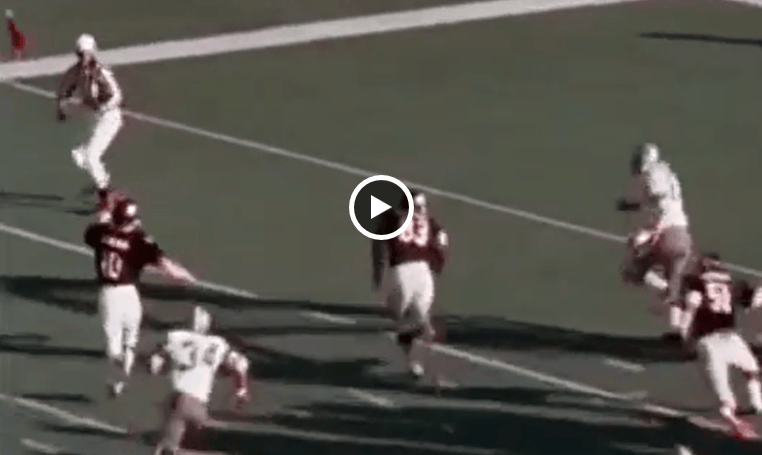
All season, Dallas alternated starts between Roger Staubach and Craig Morton. But for this game, head coach Tom Landry went a step further and had the two quarterbacks alternate plays. The loss marked a turning point: the next week, Staubach was named the starter, and the Cowboys won their next 10 games, culminating in a Super Bowl win.
Mike Fuller
A defensive back and holder, Mike Fuller had an eight-year (1975-1982) career with San Diego and Cincinnati. Primarily a strong safety, he had 18 interceptions with one touchdown return. Also known for his punt return abilities, he averaged 10.6 yards a return on 265 returns with two touchdowns. He also found the end zone on a fake field goal in 1977. Fuller ran and passed for singletons in less than a year’s time.
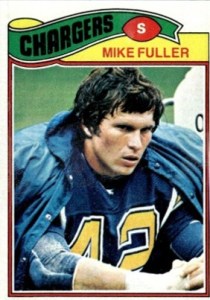
1977 Topps card
November 23, 1975
Fuller’s initial singleton occurred during his rookie year with the Chargers after a bad snap in the first quarter on a cold and windy day at Metropolitan Stadium against the Vikings. He gathered up the pigskin and threw a pass to tight end Pat Curran to tie the game at 7-7.
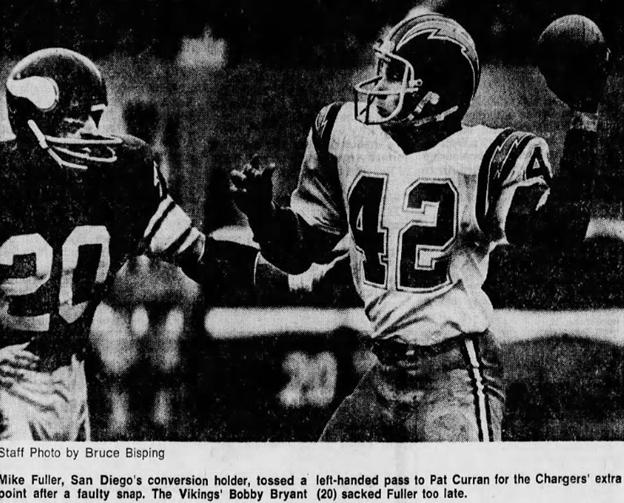
The Minnesota Star Tribune provided some additional details about the play. “The snap was bad, so I got up and chased it,” Fuller explained. “I was going to throw it anyway but as I was turning to throw I saw Curran waving his arms at me. I just threw in his general direction. I didn’t think it would ever come down.” Curran added, “I didn’t even see the snap; when I saw what had happened I just took off. I think I saw Dick Butkus do that a few years ago.”
Minnesota went on to win 28-13 and remained unbeaten at 10–0, while San Diego stayed winless at 0-10.
November 7, 1976
Lightning struck again the following year, highlighting Fuller’s improvisational skills in turning a miscue into a point. After a bad snap in the fourth quarter, he ran it in for a singleton to close out the scoring in the Chargers’ 37-21 home loss to the Colts.
Steve Kreider
The last of the three-time Singletonians was Steve Kreider, who recorded them over four seasons in the middle of his career. A wide receiver and holder for the Bengals from 1979 to 1986, he finished his career with 156 receptions for over 2,200 yards and 9 touchdowns. Kreider was a high school quarterback before transitioning to wide receiver at Lehigh University and was the emergency quarterback for a time with Cincinnati. But his greatest asset during a broken play may have been his analytical mind. During his NFL career, Kreider earned both an MBA in quantitative analysis and a doctorate in finance from the University of Cincinnati.
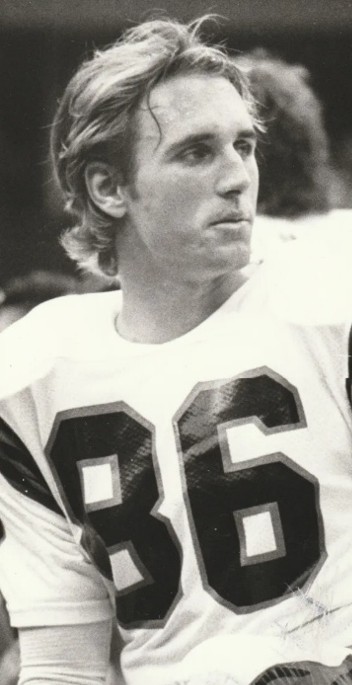
November 28, 1982
On a rainy, windy, and relatively warm (63°F) day at Riverfront Stadium, Kreider’s first run for a conversion resulted from a high and wide snap from Blair Bush. On the broadcast, the usually unflappable Bob Costas exclaimed, “What’s going on here?” Kreider could not cleanly place the ball down, so he ran toward the right side and narrowly outsprinted the defender to the pylon. Like Largent’s run in 1985, the score would likely be looked at if replay review were in place.
The weather contributed to two other snaps that were off the mark, but Kreider managed to field both, as the Bengals beat the Raiders 31-17.
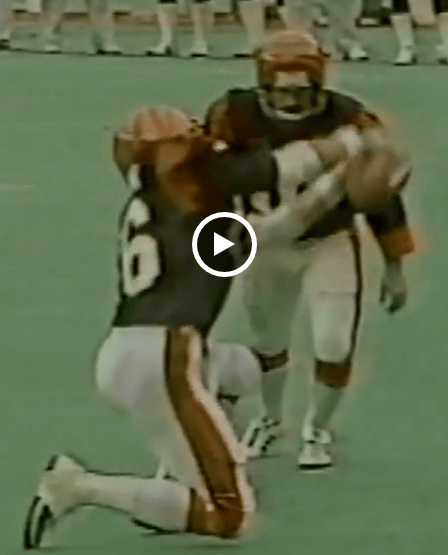
November 6, 1983
Kreider was also the catalyst for the next singleton in the league, during a game against the Oilers in the Astrodome. Following a Bengals touchdown to go ahead 30-0 in the second quarter, their extra-point team included Ross Browner, a two-time All-American defensive end at Notre Dame in the midst of his 10-year NFL career, who lined up at right end.
Kreider recounted after the game that the play began with a “wobbly snap”. Having already noticed Oilers cornerback Bill Kay nearly blocking previous kicks, Kreider again felt the pressure coming. Drawing on his experience, he took off scrambling to his right and triggered the contingency plan.
As Browner explained years later, that contingency relied on an audible to let the eligible ends know that the play had changed. “The holder would just yell out, ‘Fire! Fire!’ and that meant there was some sort of trouble with the snap, and we had to go out into our different routes. So the up-back behind me had to go toward the corner, I had to go across the middle, and then on the other side, the other guys in those same positions would go in the opposite direction.”
Kreider confirmed, “The play wasn’t any accident. We practice it, and it’s helpful when the weather is bad or you get a bad snap. I had three receivers out there.”
The contingency play, however did not catch the Oilers by surprise. “I had two people on me, which was very unique, being a defensive end,” Browner added. “I played tight end in high school, so I knew how to run a route, and Steve and I had always played around in practice throwing the ball to each other, so he knew I could catch. So he just threw it across the middle and I was open, and I was able to pull the ball in and get us our one point.” The Bengals would eventually score 48 straight points during the 55-14 rout.
October 20, 1985
Two seasons later, Kreider was involved in his third conversion, once again facing the Oilers, this time in the Astrodome. In the second quarter, after he bobbled the exchange from center Dave Remington, he easily legged it in for the score. Later Remington quipped about Kreider, “I think he just wanted to get his name in the paper. Believe me, I’ve had worse (snaps) that he put down (for Jim Breech to kick).” Houston turned the tables and soundly defeated Cincinnati 44-27.
A Singleton Duopoly: During the 1982 – 1984 seasons, there were four singletons recorded across the NFL. In another instance of the play’s extreme unpredictability, Kreider and the next player on our list, Pat Ryan, held a duopoly on them. Kreider logged two consecutively, and Ryan followed with two in a row of his own, while the rest of the league had none.
Pat Ryan
Primarily a backup quarterback, Pat Ryan’s career spanned 1978 to 1991, with all but one season with the Jets. Drafted in the 11th round from the University of Tennessee, where he had also been primarily a backup, he possessed good athleticism and was known for his scrambling ability. Ryan had 21 career starts, throwing for 36 touchdowns and rushing for just one, yet he ran for two singletons. A holder throughout his career, he notched those singletons in rapid succession, separated by just eight games.
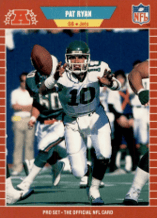
1989 Pro Set card
December 16, 1983
In the final week of the 1983 regular season, the Jets faced the Dolphins on a Friday night in a rain-filled Orange Bowl. Following a third-quarter score, a high snap from backup center and third-string long snapper Joe Pellegrini forced Ryan to go off-script. He sprinted around the right end and dove into the end zone for the singleton, tying the game at 14. Howard Cosell, calling his last football game alongside Frank Gifford and O.J. Simpson on a “Friday Night Edition” of Monday Night Football, marveled at “what an effort” by Ryan on the play.
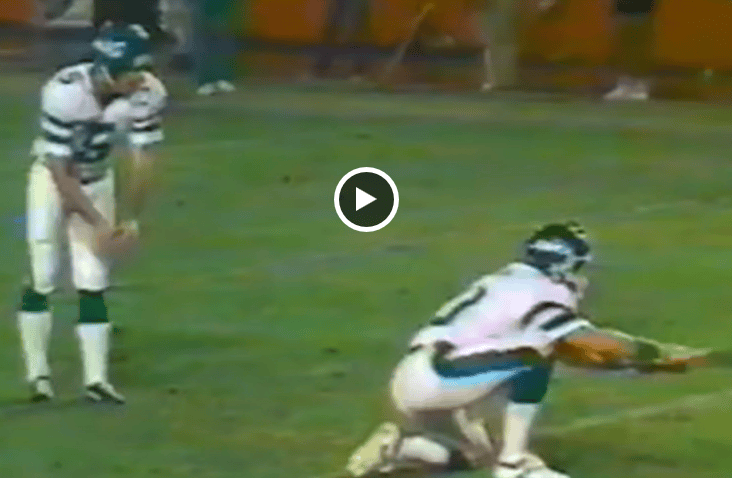
Later in the game, Mike Kozlowski’s back-to-back interception returns for touchdowns off Jets starter Richard Todd sparked Miami to a 20-point run and a 34-14 victory.
October 21, 1984
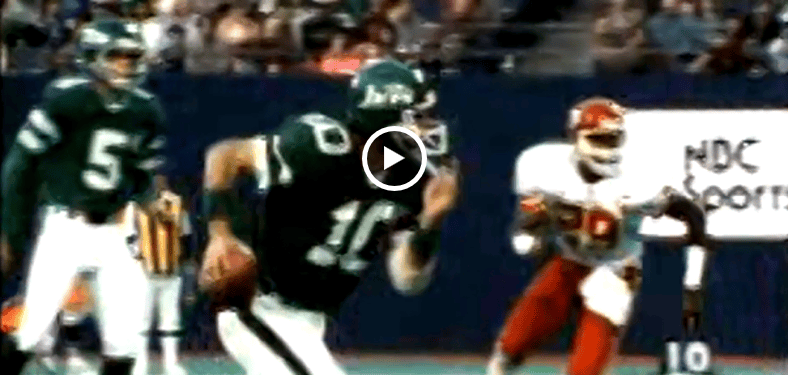
In the third quarter against Kansas City, after a New York defensive touchdown, Ryan could not control the snap but recovered quickly and swept around right end for the singleton. (A brief video snippet of the play starts at 0:37 in a career highlight video from the Jets’ website). The Jets handily beat the Chiefs 28-7 at the Meadowlands behind a stellar performance from Ryan, who took full advantage of a rare start and went 21-31 for 260 yards and 3 touchdowns.
Other Notable Singletons
Beyond Hall of Famers and repeat participants, other singletons stand out for the player’s career trajectory, the brevity of his NFL tenure, or the significance of the game.
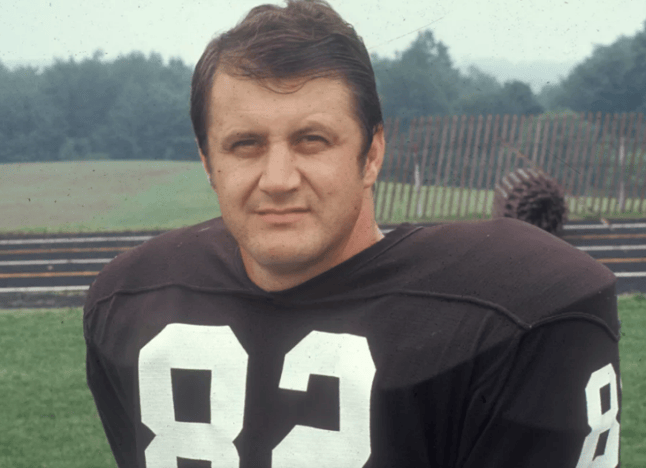
Jim Houston
A four-time Pro Bowl linebacker and defensive end, Jim Houston spent his entire career, 1960-1972, with Cleveland. Houston was one of the few football players to achieve an “in-state triple crown“, winning a state high school football championship in Massillon, Ohio, a college national championship with Ohio State University, and an NFL championship with Cleveland. He is also one of only two NFL players since 1950 to score on an extra point, safety, defensive touchdown, and offensive touchdown. Houston’s touchdowns came on interception returns and, appropriately, a fake field goal.
October 30, 1966
In the second quarter of Cleveland’s 49-17 trouncing of the expansion Atlanta Falcons at Fulton County Stadium, a high snap on the extra point turned into a spectacular bit of improvisation. The snap flew over the holder, backup quarterback Jim Ninowski, who eventually tracked the ball down near the 30-yard line. Dashing to his right with two Falcons in close pursuit, he was forced to throw off one foot toward the corner of the end zone.
Astonishingly, Ninowski was unsure who he was throwing to when he heaved the pass. “I spotted a white shirt in the end zone and cut loose,” Ninowski later recalled. “I figured it was either Houston or [Vince] Costello.” As the film shows, his desperation pass dropped right into Houston’s hands.

1) Ninowski ready for snap; 2) Snap sails over him; 3) Snatches it up and throws toward end zone; 4) Houston catches pass in end zone surrounded by Falcons and Costello. ▶ Watch the play.
What may have looked like mayhem was a special teams play design. As Ninowski pointed out, “We have a goal line set up with Houston as the right end and Costello off the line in the fullback’s position. Both are eligible receivers. When something goes wrong on a kick they both go down as receivers.”
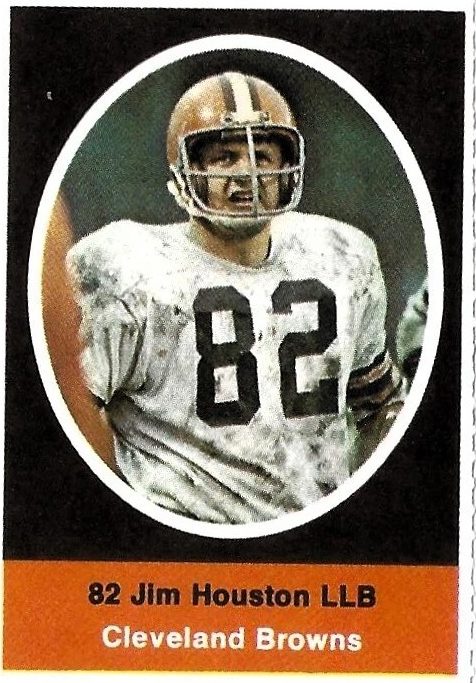
1972 Sunoco Stamp
After the game, Houston offered some playful self-mockery about his receiving skills. “Did you notice my moves on the play? And the way I looked the ball right into my hands the way Woody [Hayes] told me to?” However, long after his catch, Atlanta defensive tackle Chuck Sieminski had leveled him with a flagrant cheap shot. Houston later joked about the late hit, “You can have the receiving job, though. I almost got killed after I caught the ball.”
Andy Russell
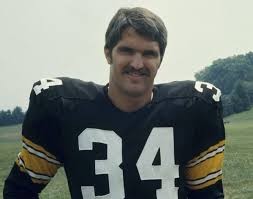
Like Conerly, Andy Russell is widely considered a Hall of Fame-worthy player who deserves to join his longtime Pittsburgh linebacking partners, Jack Ham and Jack Lambert, in Canton. Russell missed two years due to military service early in his playing days, but his career still spanned 12 seasons. He never missed a game and was captain of the Steelers between 1967-1976. Russell was selected to seven Pro Bowls and was part of two Super Bowl-winning Steeler teams.
December 11, 1966
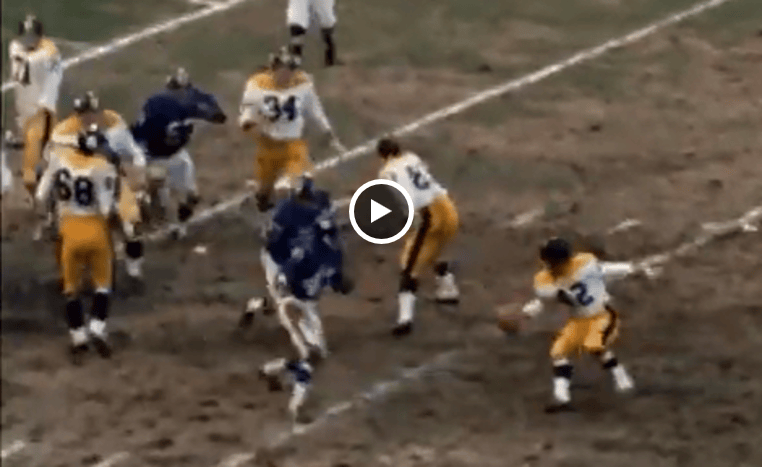
Just over a month after Houston’s catch, Russell also scored on a conversion pass. In the fourth quarter against the Giants in Yankee Stadium, holder Dick Hoak could not cleanly handle a high snap. He started moving left, backtracked and rolled right to find Russell for the singleton. It was the Steelers’ last point in a 47-28 blowout. The video reveals that neither Hoak nor kicker Mike Clark yelled the “fire” call. Russell actually turns around to watch for the kick before realizing the play is broken, then slides to his right to evade defenders and catch Hoak’s pass.
Dan Reeves
A Super Bowl-winning player and long-time head coach, Dan Reeves was a running back and holder for the Cowboys from 1965 to 1972. A proficient receiver out of the backfield, he amassed over 3,900 yards from scrimmage and 43 touchdowns.
After his playing career ended, he spent 23 years as a head coach with the Broncos, Giants, and Falcons, finishing with an overall record, including playoffs, of 201-174-2. Four times he took his team to the Super Bowl, but each time finished as runner-up. Reeves is the only person to score a singleton as a player and oversee one as head coach, having led New York during David Treadwell’s conversion run.
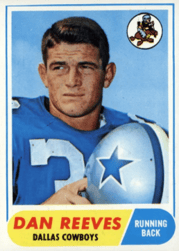
November 7, 1971
Reeves’ singleton was a fitting bit of “turnabout is fair play”. Just one week after falling victim to Bobby Douglass’ conversion run, the Cowboys took their turn against the Cardinals. In a tight game with temperatures only in the high 30s at Busch Stadium, Dallas took a 12–10 lead following a Staubach to Mike Ditka touchdown pass. On the extra point, Reeves took a bad snap and legged it out for the conversion. The Brownwood Bulletin’s Phil Watts described the play:
“Dan Reeves…pulled a Bobby Douglas (sic) on the Cards. Remember last week when the big Bear quarter had to run an extra point attempt in following a bad snap from center? Well, Reeves, also remembering what Douglas had done, picked up a bad snap and trotted into the end zone for a hard earned point.”
Dallas went on to beat St. Louis 16-13 and started a win streak that culminated in a Super Bowl victory.
Ron Holliday
Almost all of the singletons we have reviewed were by players who followed a traditional path to the NFL; Ron Holliday is a striking exception:
- College Football: Did not play. Spent time in the New York Yankees farm system after high school, then attended University of Pittsburgh strictly as a student.
- Path to the Pros: Worked his way up from Philadelphia-area rough-touch leagues and minor league football.
- NFL Experience: Played only 11 career games, all with the Chargers.
- Positional Rarity: A Black holder, highly unusual throughout NFL history.
In an interview with the author, Holliday recounted his unorthodox journey to the NFL and the story of his 1973 singleton. His transition to the gridiron began at a friend’s urging, when he joined the Delaware County (PA) Rough Touch league. This no-holds-barred league was also part of another Philadelphia-area wideout’s unlikely path to the NFL: Vince Papale of Invincible movie fame.
1973 San Diego Media Guide
After a season of that mayhem, in 1970, Holliday tried out and won a spot with the Pottstown Firebirds, an Atlantic Coast Football League (ACFL) team that served as a minor league club of Philadelphia. The following year he played for the ACFL’s Norfolk Neptunes.
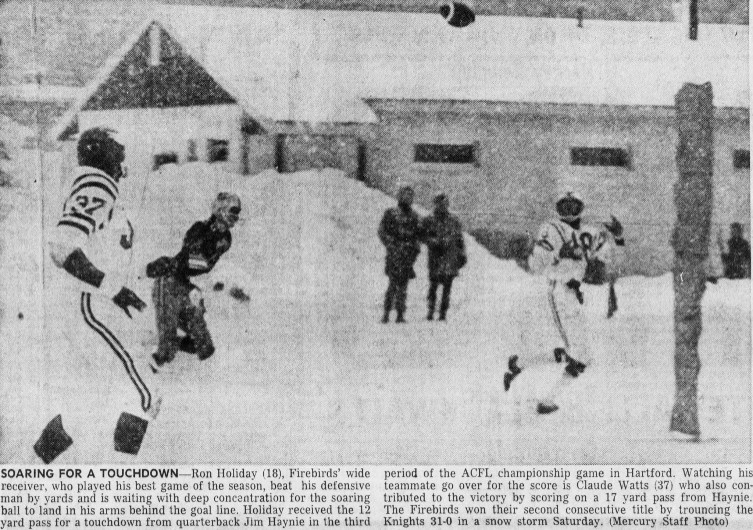
Pottstown played the Hartford Knights in the 1970 ACFL championship game during a snowstorm in Hartford. Holliday starred for the Firebirds, catching eight passes for 198 yards and a touchdown. NFL Films won an Emmy for their documentary chronicling the Firebirds’ 1970 season, including highlights of the championship game. The season was also the subject of Jay Acton’s book, The Forgettables. Photo courtesy of Pottstown Mercury.
Holliday’s unlikely rise through the football ranks continued as he tried out and earned a roster spot with the Chargers in 1973. Following his lone season with San Diego, Holliday then spent two years with the Philadelphia Bell of the World Football League (WFL), where he crossed paths with Papale. After spending 1976 on injured reserve with Buffalo, his NFL career ended when he was cut during their 1977 training camp.
The Hidden Barrier at Holder: Of the verifiable holders involved in singletons, 57% were quarterbacks, 30% were wide receivers or defensive backs, and punters and running backs made up the remainder. For much of this era, however, strong racial biases in the NFL largely excluded Black athletes from playing quarterback. Furthermore, even as Black athletes integrated positions like wide receiver and defensive back, coaches rarely entrusted them with the decision-making and ball-handling responsibilities of the holder. It was treated as a quarterback-equivalent role, extending those same racial prejudices to special teams, and making Black holders exceptionally rare.
October 28, 1973
Earlier in the 1973 season, the Chargers’ regular holder, backup quarterback Wayne Clark, was put on the inactive list. Holliday recalled that when the coaches asked if anyone had holding experience, he quickly raised his hand. Having held during his time in the ACFL, he was driven by a single thought: “I’ll do it, I’ll do anything to get in the game.” He went on to hold for San Diego for the remainder of the year, even after Clark was activated.
Holliday scored his only NFL point in a 16-16 tie against the Browns at Municipal Stadium in Cleveland. The game was played in an absolute quagmire, with the exposed dirt from the stadium’s baseball infield turned into a muddy soup. Given the horrible field conditions and weather, the game was filled with both mishaps and great individual efforts.
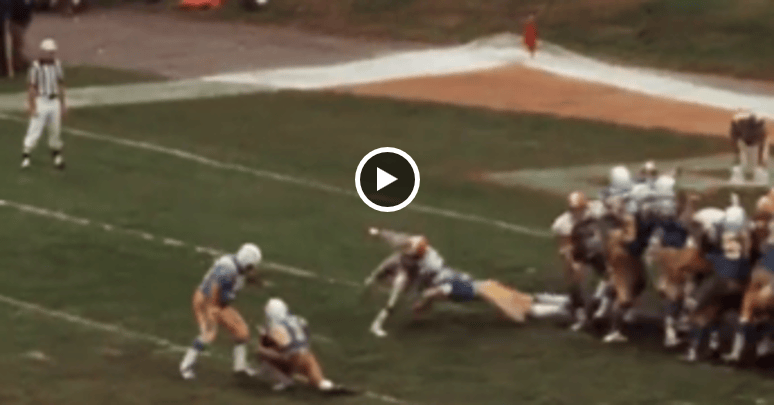
In the first quarter, in a scene straight out of NFL Follies, San Diego kicker Ray Wersching had tried a long field goal and, in the process, slipped and fell flat on his back (at 0:40 in the video). After the pratfall, Holliday said Wersching was more measured in his approach and went 3-for-4 on his remaining kicks, including the game-tying field goal with 30 seconds remaining.
Holliday’s singleton came near the end of the second quarter, after a Chargers’ touchdown gave them a 9-3 lead. Holliday described the conditions as “horrible, rain most of the game”. The extra-point snap from center Carl Mauck was off-target, which Holliday noted was the only bad snap from Mauck during the entire season. Simultaneously, a mix-up on the left side of the San Diego line forced the left end to take on two defenders. When he chose the inside rusher, the outside defender gained a free path to the backfield, practically beating the ball back to Holliday. With the Cleveland defenders “breathing down on him,” he yelled “Fire”, scrambled to his feet, and turned on the jets to easily win the race to the left pylon for the critical point.
Nolan Cromwell
A tremendous dual-sport athlete at the University of Kansas, Nolan Cromwell was an honorable mention All-American wishbone quarterback and an All-American in track and field. Drafted by the Rams as a defensive back in 1977, he went on to have an 11-year career, primarily at safety. Cromwell was a four-time Pro Bowler, three-time All-Pro, and a member of the Hall of Fame’s 1980s All-Decade Second Team.
In addition to his dominance on the defensive side of the ball, Cromwell was a holder. His athleticism and experience as a running quarterback in college made him a uniquely dangerous weapon. During the course of his career, he also scored via three fake field goals and returned four interceptions and a fumble for touchdowns. Fittingly, the pioneer of special teams ranking, noted sportswriter Rick Gosselin, named Cromwell to his all-time special teams squad as the first-team holder.
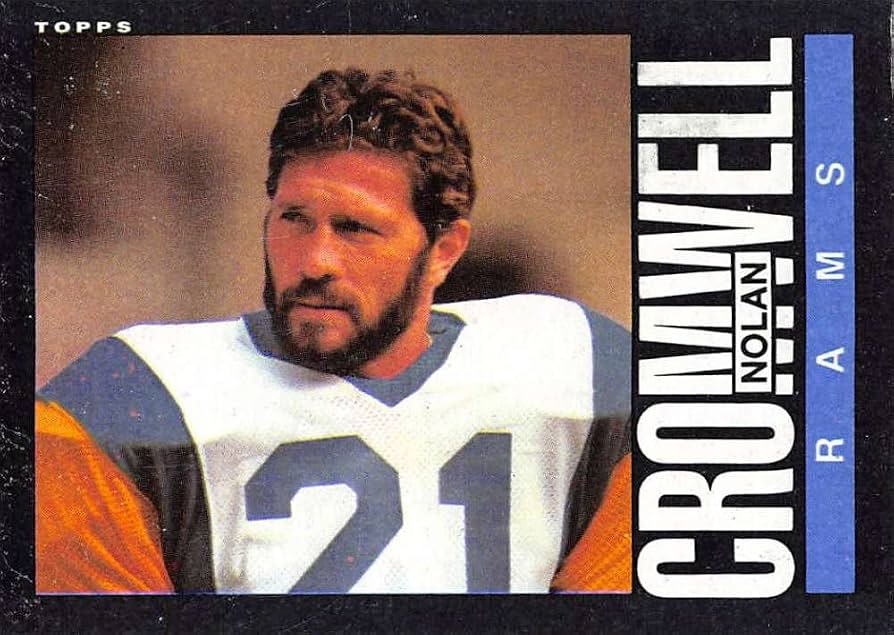
December 7, 1980
In spite of relatively mild December temperatures at Buffalo’s Rich Stadium, a low snap disrupted the Rams’ conversion in the third quarter. Cromwell was unable to handle the ball cleanly, but snatched it up and ran untouched around the left end to tie the game at 7. From the replay, you can see that even kicker Frank Corral pitched in with a “little block” to help spring Cromwell.
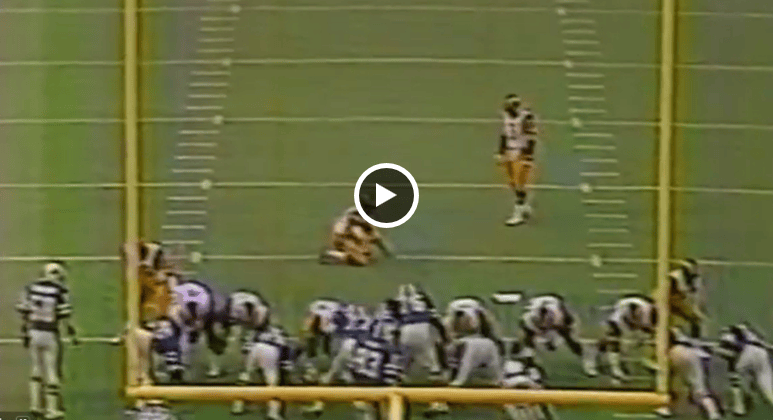
During the ensuing kickoff return, Hall of Fame head coach and special teams pioneer George Allen offered a post-mortem on the hold. Citing his rule for long snappers, “better low, than high”, Allen argued that Cromwell should have caught the snap. Los Angeles eventually went on to lose to Buffalo in overtime 10-7.
David Treadwell
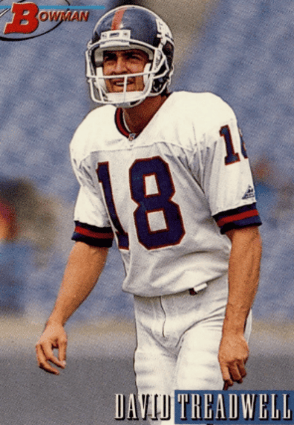
Our last player of note is kicker David Treadwell, who capped an unconventional football journey by recording the last singleton in NFL history. A soccer standout who never played high school football, he walked on at Clemson and built a standout collegiate career, including being named an All-American in 1987. Despite his college success, he went undrafted and spent a full season trying to break into the league. Once Treadwell earned a spot on Denver’s roster in 1989, he immediately made his mark, earning a Pro Bowl selection in his rookie year. Over a six-year career (1989–1994) with the Broncos and Giants, Treadwell scored 627 points with 96.5% accuracy on extra points and 76.2% on field goals.
January 9, 1994
The final singleton took place at the very end of the era, coming in the playoffs following the 1993 season. Unfolding during a Wild Card matchup between the Vikings and Giants at the Meadowlands, it is the only singleton scored in the postseason.
The game was played in brutal conditions, termed a “Gale Bowl” by a sportswriter, with temperatures hovering around 20°F combined with winds of 20+ mph creating a near 0°F wind chill. In an interview with the author, Treadwell recalled how during pregame warm-ups, “The ball was going nowhere, it felt frozen, not compressing off my foot to get any explosion off the ball – like kicking a brick.”
Following a third-quarter touchdown to give the Giants a 16-10 lead, the extra-point snap from Bart Oates to holder Mike Horan sailed slightly wide. Treadwell explained what came next: “The snap hit [Horan’s] hands, did not slow it down much, just a glancing blow that ricocheted directly to me. My natural reaction was to reach out, and I caught it.” Treadwell added, “Horan was supposed to yell ‘fire,’ and the ends would peel off into the corner of the end zones. Instead, he just yelled ‘run,’ and because the defensive ends had crashed in, I had a direct path to the end zone.”
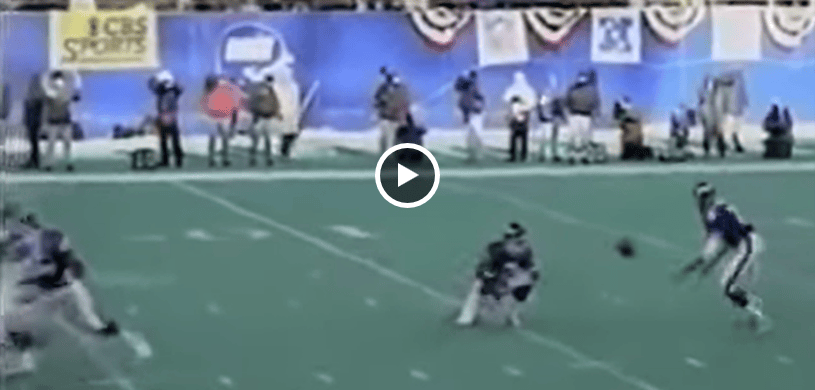
Horan agreed: “I saw David catch it. I looked to the line of scrimmage; I saw David could run with it. He’s got 4.6 speed; I knew he could make it.” Treadwell’s quick thinking allowed him to sprint untouched around the left side for the singleton. It was the last, and critical point, in New York’s 17-10 win. After the game, Treadwell summed up the play perfectly, “It was probably easier to run it in than it was to kick it in.”
Deconstructing the Singleton
By closely examining the singleton’s distribution, we can better understand the anatomy of this rare, near-forgotten play. And what makes deconstructing a play as unique as the singleton so much fun is unearthing the insights and oddities hidden within the data.
Mapping an Era
With a total of 45 singletons over 44 seasons, it is logical to expect a tidy distribution that has about one occurrence per year, but the reality is quite different.
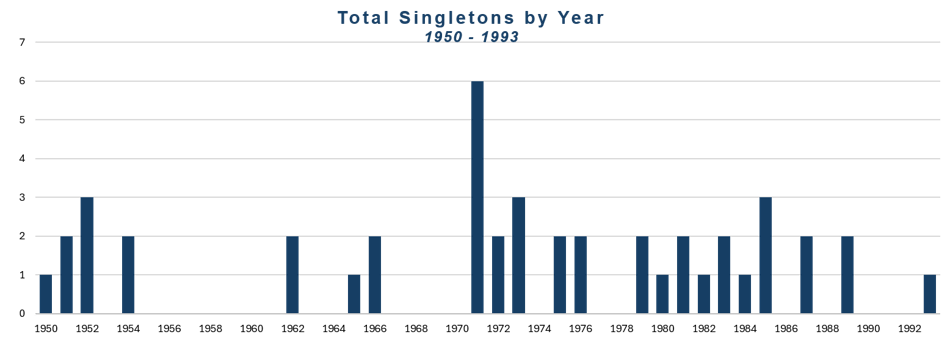
As the above graph shows, singletons between the 1950 and 1993 seasons were unevenly spread, with multi-year gaps followed by bursts. In fact, only six seasons in our span matched the “average” of one singleton.
The founding member of the NFL’s “No Singles Club” is Washington. Of the franchises in continuous operation since 1950, they are the only one without a singleton. The other teams active during the era and in the no-singleton fraternity are Minnesota (1961 inception), New Orleans (1967), along with five from the 1970 AFL merger – Denver, Kansas City, Miami, New England, and Oakland.
The NFL experienced three long-term droughts with no singletons. But what makes these dry spells even more remarkable is how quickly they were interrupted by deluges. The first extended gap was from November 1954 through October 1962, ending amazingly when two conversions happened within a two-week span. Even more dramatic was the singleton-free period from September 1967 through October 1971, which was followed by six singletons in the remainder of 1971. Another extended multi-season absence stretched from September 1990 through January 1994, culminating on January 9 with the last singleton in NFL history. Below are the most notable times when the singletons came in bunches:
- October 10, 1954: Even with just 12 teams in the league, the first “daily double” took place, with George Blanda and Charlie Conerly doing the honors.
- October – December 1971: The “Year of the Singleton”, which saw 6 of the 45 total occurrences (13%) packed into a wild six-week stretch. The season was so filled with singletons that it featured two separate daily doubles (October 31 and November 14).
- October 28– November 4, 1973: Three took place in just an eight-day window by players with contrasting careers. The streak began with Ron Holliday, whose scramble provided the only point of his 11-game NFL career. It was followed by conversion runs from wide receiver Bob Chandler and quarterback Lynn Dickey, two well-known veterans who enjoyed long careers.
- October 28, 1979: Another same-day pair, this time featuring Roger Wehrli and Baltimore kicker Steve Mike-Mayer. Part of a family kicking duo with his brother Nick, Steve was one of three kicking specialists with singletons, alongside Bruce Gossett and David Treadwell.
- September – October 1985: Three singletons transpired across six weeks, all sharing the same catalyst: holder drops. The usually sure-handed Steve Largent and Steve Kreider both picked up their fumbles and scrambled in for the conversion. Meanwhile, Atlanta’s backup quarterback David Archer took a different route, salvaging his muffed snap by throwing a pass to defensive end Rick Bryan.
- October 4, 1987: The last “two-fer” happened during a players’ strike. Despite the strike, the NFL continued playing games for three weeks, primarily with replacement players. The lower caliber of players combined with limited practice time led to chaotic plays, like this entertaining singleton in a game between San Diego and Cincinnati.

1) A low snap bounces off the Chargers holder (and future college head coach) Rick Neuheisel and ricochets to the kicker Jeff Gaffney. 2) Gaffney starts running left but is cut off and in desperation, laterals back to Neuheisel. 3) Neuheisel initially looks to pass. 4) Finding no one open, he crosses the entire field and dives into the end zone for the conversion. ▶Watch the play
To smooth out the year-to-year volatility and better gauge long-term trends across the 44-season scope, breaking it into four 11-season periods makes the broader patterns easier to see. Additionally, because the opportunities for a singleton grew during this span due to expansion and longer schedules, standardizing the data as a percentage of extra-points attempted (XPAs) for each period offers the cleanest indicator of the long-term trend.
Frequency by Era
Singletons as a Percentage of Extra-Points Attempted, 1950–1993
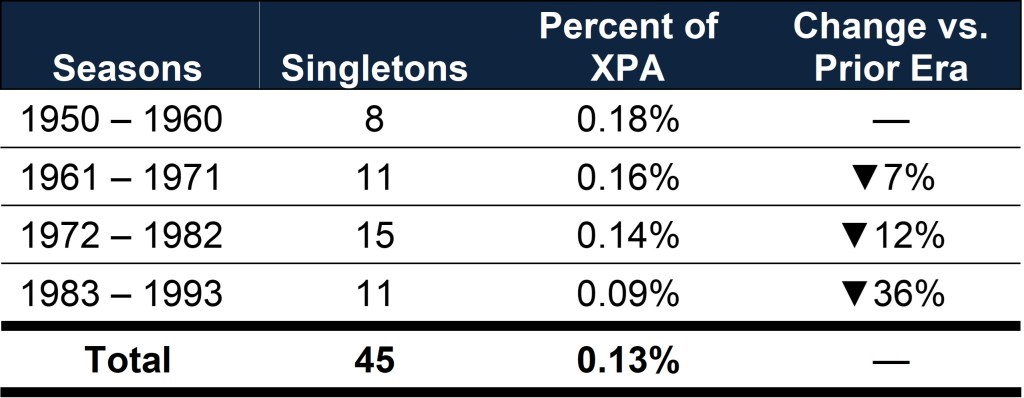
As the above table shows, the singleton rate declined at a modest pace across the first three periods, with reductions of 7% and 12%. However, the rate declined sharply during the 1983–1993 timeframe, plummeting 36%. This steep drop was driven largely by the evolution of special teams, a shift we will explore further in “The Evolution of Special Teams” section.
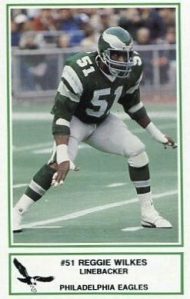
The One-Point Club: Between 1950 and 1993, 21 NFL players scored one point during that span. Eight were the result of a singleton, with the remaining 13 kicking a lone extra point – a mix of punters, position players, and cup-of-coffee kickers. The eight one-point Singletonians were:
- Jack Nix (E, San Francisco, 1950)
- Gail Bruce (DE, San Francisco, 1951)
- Mickey Zofko (RB, Detroit, 1972)
- Ron Holliday (WR, San Diego, 1973)
- Reggie Wilkes (LB, Philadelphia, 1981)
- Rich Wingo (LB, Green Bay, 1981)
- Chris Kelley (TE, Cleveland, 1987)
- Chris Mohr (P, Tampa Bay, 1989)
Boom, Bust, and the Singleton
“Real randomness does not look random.”
— Nassim Nicholas Taleb, Fooled by Randomness
During the initial research for this article, the multi-season gaps followed closely by years with multiple singletons were baffling. These boom-and-bust cycles immediately raised the suspicion that the dataset was flawed – either during data collection for our analysis or the conversions were not originally recorded correctly.
However, this doubt was a basic misunderstanding of probability and randomness. As former professor and financial derivatives trader Nassim Nicholas Taleb observed, we are intuitively wired to believe that random events should be evenly distributed over time. Our brains crave order; so, by projecting a predictable schedule onto disorder, we fool ourselves into a comforting sense of control and understanding.
To better grasp this concept, the first step is to define the term “random”. Often in casual conversation, the word is used to describe a single quirky or “out-of-the-ordinary” event. But in statistics, true randomness is not about one unusual event; it describes a series of events with a complete absence of predictability. That distinction is why the singleton’s clean 1.02 per season average is so deceptive. The average creates a false expectation of a predictable annual appearance. In statistical theory, however, rare events can routinely produce exactly what the singleton exhibits: long droughts interrupted by occasional clustering. This gets to the heart of a play driven by the unpredictability of botched snaps, dropped holds, fortunate bounces, and the chaos of “fire” calls.
A Lesson in Randomness: In an article titled “Predictability”, ESPN Analytics’ Brian Burke provided a classic parable illustrating our misconceptions regarding randomness: “There’s a story about a statistics professor who challenges his class to a contest. He divides the class in half and tells one group to flip a coin 100 times and write the sequence on the board– THHTTH… The other group is told to invent and write their own sequence of heads and tails on the board as randomly as they can, without looking at the other group’s sequence. The professor says that if he can’t tell the true random sequence from the fake one, he’ll give everyone an A. He leaves the room until both groups are done, then returns and instantly spots the fake sequence.
The professor can identify the fake random sequence so easily because it has too many alternations between heads and tails, and too few long streaks. The fake sequence looks like HTTHTHHTHT, while true randomness often looks like HHHHHTHTTH. True randomness can be quite streaky…”
Comparing the singleton’s rarity and volatility against other unconventional, but much better-documented, scoring plays offers a useful benchmark. This comparison helps gauge whether the singleton’s erratic distribution is likely the result of missing data or is consistent with the patterns of other rare scoring plays.
The Pro Football Reference database was queried for all unconventional NFL scoring plays across the 1950–1993 regular season and postseason (excluding the AFL):
Comparing Unconventional Scoring Plays (1950-1993)
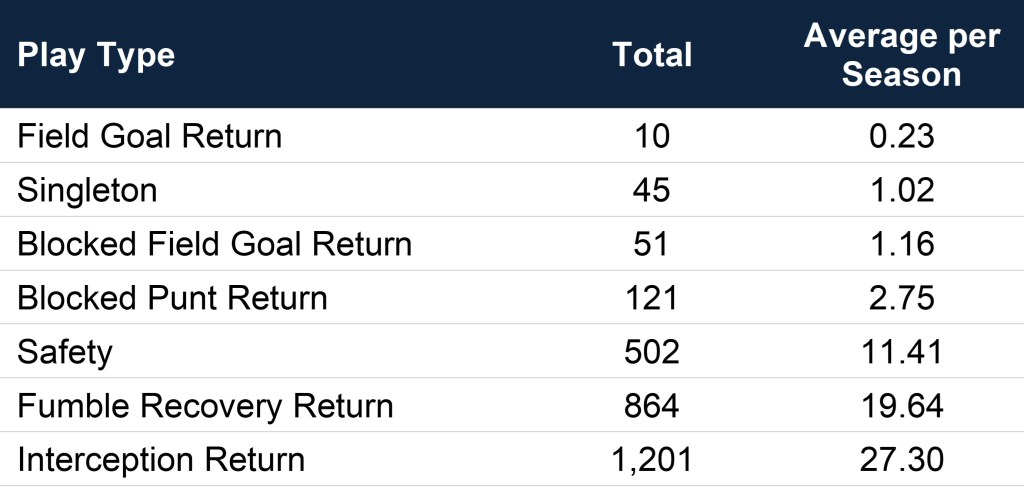
The table confirms that the singleton was, not surprisingly, one of the rarest scoring plays in the NFL over this period. To evaluate its volatility over time, the next step is to compare its distribution against the scoring plays that are roughly equivalent in volume.
The only play rarer than the singleton for the in-scope years was the field goal return. However, it behaves more like a structured special teams play, such as a kickoff or punt return. Plus, the frequency of field goal returns was affected by rule changes. In 1974, the spot for missed field goals was changed from the 20-yard line to the previous line of scrimmage to discourage low-percentage, long-distance field goals. The same year, the goalposts were moved to the back of the end zone, further increasing the risk to the defense of not returning missed field goals past the previous line of scrimmage. Over the scope of our study, the last return took place in 1971.
The scoring plays that are a better fit for comparison are blocked field goal returns and blocked punt returns. Much like the singleton, they are initiated by a special teams breakdown, often depend on a fortunate bounce of the ovoidal ball, and require secondary execution – the ability to instantly pivot from a play’s primary objective into an unscripted, opportunistic scoring effort. As shown below, the historical distributions of blocked field goal and blocked punt returns confirm that, like the singleton, both are highly volatile, with boom-and-bust cycles.
Evaluating Patterns: Singletons vs. Blocked Punts and Blocked Field Goals
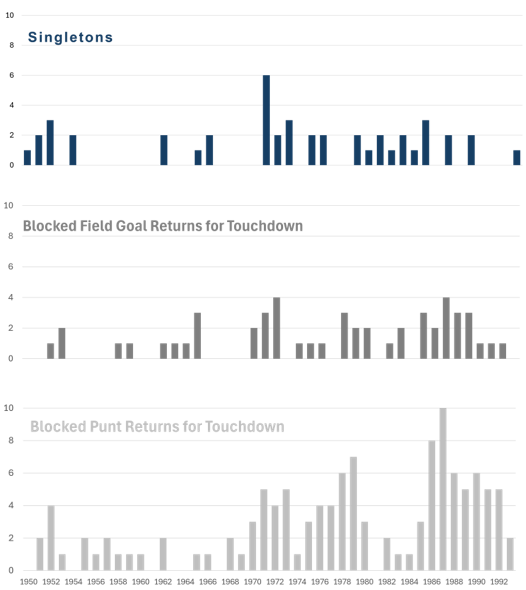
Closer examination helps to quantify those cycles and reveals several statistical similarities between these three scoring plays:
Special Teams Volatility Index
Measuring frequency, rate, and variance (1950–1993)
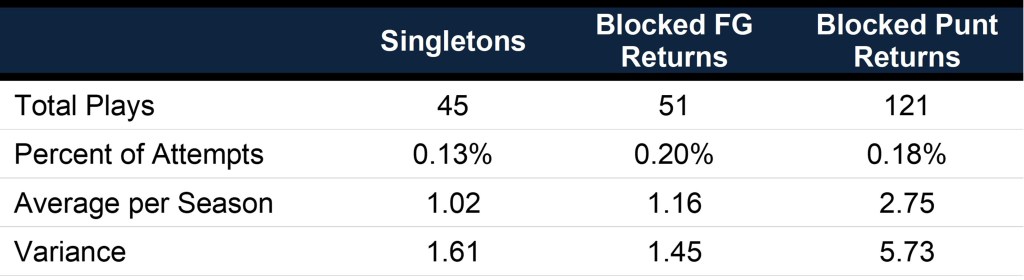
Percentage of Attempts: This metric provides a simple measure of a scoring play’s true rarity. The absolute number does not put into context how often the scoring play happens in relation to the respective opportunities (PAT, field goal, punt). Blocked field goal returns appear nearly identical to the singleton, with 51 occurrences, just a 13% difference. Yet, because field goals are attempted far less frequently than extra points a blocked field goal return happened 52% more often than a singleton on a per-attempt basis.
Conversely, a blocked punt return transpired 169% more often than a singleton. However, much of this large gap is a result of sheer volume, as there are significantly more punts in a season than PATs. When looking at the rate per attempt, that volume gap shrinks to only a 31% difference in frequency.
In terms of rate per attempt, the singleton is notably rarer than a blocked field goal return but ranks closer to a blocked punt return – two plays that feel far more familiar.
Average per Season vs Variance: The average measures the typical occurrences in a season, while population variance measures how dramatically that number swings from season to season. When variance significantly exceeds the average, as is the case for these three scoring plays, the data is consistent with an overdispersed distribution, marked by extreme streakiness.
- Singletons: The variance of 1.61 far exceeds the average of 1.02, indicating that singletons rarely stick to a steady “one per year” rate; instead, they happen in bunches in some campaigns while absent in others.
- Blocked Field Goal Returns: Of the three plays, blocked field goal returns have the narrowest gap, demonstrating limited over-dispersion with the variance of 1.45 moderately exceeding the 1.16 average.
- Blocked Punt Returns: These exhibit the largest numerical swings. The variance of 5.73 is more than double the average of 2.75, indicating that blocked punt returns experience drastic, year-to-year spikes and lulls.
This high volatility underscores how difficult it is for a special teams breakdown to result in a score. Whether the offense or defense capitalized, an improbable sequence of events had to align. This dependence on failures and lucky bounces helps explain why these plays do not follow an even pace, virtually ensuring their extreme streakiness.
The Winner’s Illusion: Teams that scored a singleton won nearly 70% of the time (31-13-1). Does this mean that scoring one helped teams win? This is another probability deception that Taleb warns about: misinterpreting a statistical result as a causal effect. In reality, winning teams simply score more touchdowns than their opponents, earning additional extra-point attempts, and further chances at “stumbling and bumbling” into a singleton.
Although incomplete records may still hide a few undocumented conversions, the play’s skewed distribution is not unique among scoring plays driven by special teams breakdowns. These feast or famine cycles are not gaps in the historical data – they are part of the singleton’s charm.

September 6, 1981: In the Green Bay – Chicago game on opening day, after the Packers’ first score of the year, a blown snap led to a textbook-executed scramble for the singleton. 1) The snap forces Packers punter and holder Ray Stachowicz to abandon the hold and snag the ball off the turf. 2) Stachowicz scrambles to the left with eligible end Rich Wingo out in front as his lead blocker. 3) Realizing they only have one Bears defender to beat, Stachowicz patiently waits for the defender to commit to rushing him. 4) He calmly lofts a pass over the defender to a wide-open Wingo to secure the point. ▶ Watch the play.
The Forces Behind the Singleton
Most fans would intuitively believe that weather was a leading culprit for a botched extra-point snap or hold. Likewise, it is reasonable to assume that increased use of specialists would cure these errors. Yet, further analysis revealed that these factors, and others, affected singletons in surprising ways.
Weather and Playing Surface
The meteorological data reveals an unexpected twist. In total, only 23 of the 45 (51%) games were played in adverse weather. Five games had two of these conditions, but none had all three. For this analysis, adverse weather includes games with rain, along with wind and temperature thresholds as defined in a Wharton School study on the impact of weather on NFL offenses. (Game-by-game weather details are available in the companion spreadsheet).
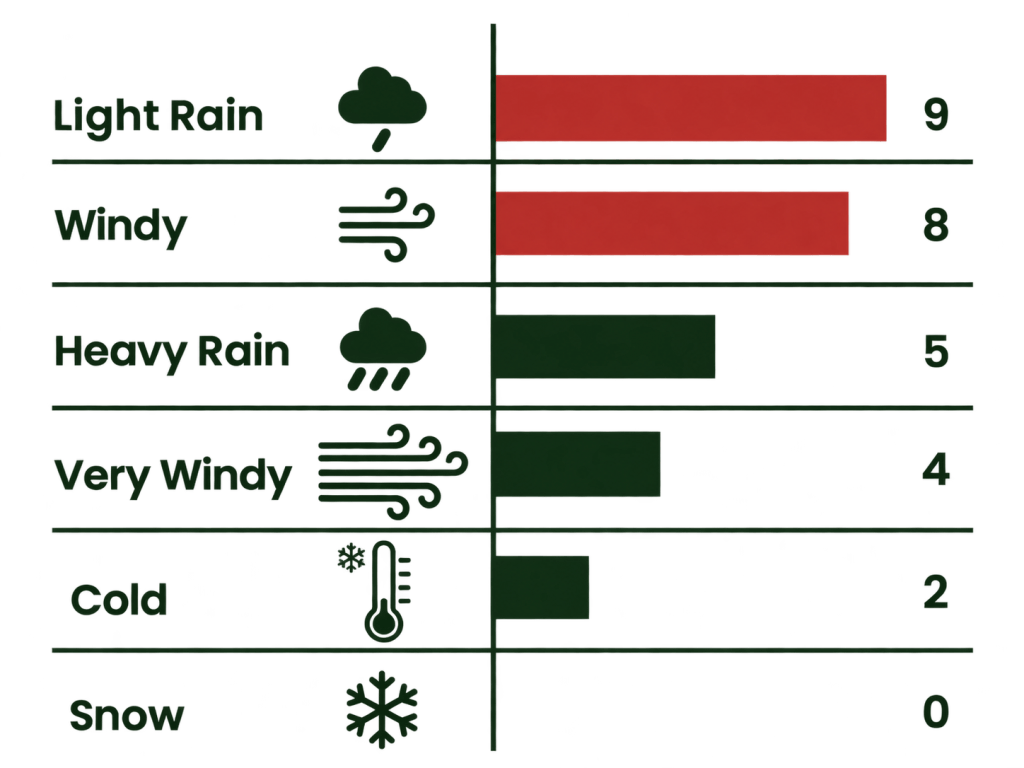
Weather Thresholds:
Windy: 15–19 mph
Very Windy: 20+ mph
Cold: Below 26°F
While some games took place in terrible conditions, weather was less of a driver than expected. Instead, inclement weather introduces an intriguing hypothesis: weather acts as a double-edged sword. The same harsh elements that cause bad snaps and mishandled holds also make recovering the football and executing a run or pass for the conversion more challenging.
The details support this dynamic: Singletons seemed to thrive in a meteorological “Goldilocks” zone (shown in dark red) – weather just bad enough to disrupt the kicking process, but not so extreme that a holder or kicker could not quickly scoop the ball, plant his feet, and execute a desperate run or pass.
That same dynamic also helps explain the zero at the bottom of the chart – snow. If wind and rain make snaps dicey and loose balls hard to corral, snow makes it nearly impossible. Compounding this, opportunities for snow games were limited for much of our scope due to the mid-December end of the NFL regular season.
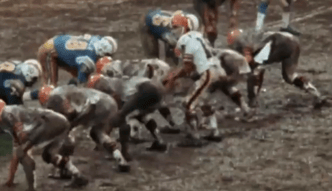
Thick mud across the line of scrimmage in the 1973 game
between San Diego and Cleveland that included Ron Holliday’s singleton.
The data for playing surfaces offers another counterintuitive twist. Although torn-up and muddy grass fields definitely contributed to extra-point miscues, a remarkable 19 (42%) singletons happened on an artificial surface. An analysis of historical stadium surfaces in our companion spreadsheet found the approximate percentage of NFL games played on artificial turf over our timeframe was 38%. Calculating an expected amount – adjusting for the prevalence of artificial turf in each season – yields roughly 16 singletons. Thus, singletons occurred at a slightly higher rate than expected on synthetic grass.
So, why the increase on the green carpet? Artificial turf by itself did not cause more PAT miscues, but it facilitated a faster recovery when the operation broke down. Truer bounces and better traction helped players make quicker transitions to running or passing for a score.
Dramatic weather and atrocious field conditions make for great football lore – such as Ron Holliday securing a point in a Cleveland mud pit or David Treadwell running one in during a frozen, early-January gale at the Meadowlands – but the numbers tell a different story. These conditions were occasional catalysts of singletons, but not the overwhelming determinants fans might expect.
The Evolution of Special Teams
As shown earlier in the long-term distribution trends, the 1983-1993 period saw a substantial decrease in singletons as a percentage of extra-point attempts compared to prior periods. There is no doubt that randomness played a part, but much of the decline likely reflects the evolution of the third phase.
Specialists such as soccer-style kickers began emerging in the 1960s, and by the early 1970s, kickers and punters were already largely specialist roles. However, specialization itself does not explain the decline of singletons in 1983-1993. The breakdown that initiated every singleton stemmed from the holder or snapper, and these two roles did not routinely become specialized until much later.
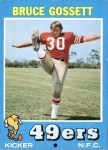
An early kicking specialist, Bruce Gossett, threw for a single point conversion to running back Larry Schreiber on November 14, 1971, the same day as Butkus’ first singleton. (1971 Topps card)
Two singletons illustrate the evolution of the holder. In December 1965, a high snap forced Giants backup quarterback Gary Wood to practically jump for the ball before scrambling around the right edge for the conversion. Twenty-four years later, in October 1989, a nearly identical high snap also forced Tampa Bay’s punter Chris Mohr into a right-side scamper. These two plays highlight the significant personnel shift in the role: Wood represents the era of the quarterback-as-holder, while the Buccaneers were early adopters of using the punter – a shift driven by the extra practice time available for punters compared to quarterbacks – well before the strategy became commonplace in the early 2000s.
Every successful placekick depends on precise timing and coordination among the snapper, holder, and kicker. It all starts with the real difference-maker in the process: the snapper. Of the known breakdowns resulting in a singleton, 65% were due to the snapper; see companion spreadsheet for details.
One of the first snapping specialists was George Burman, employed by George Allen in the late 1960s and early 1970s. Despite this early innovation, the first pure long-snapping specialist was not drafted until 1998, and even well into the following decade, many still filled other roles.
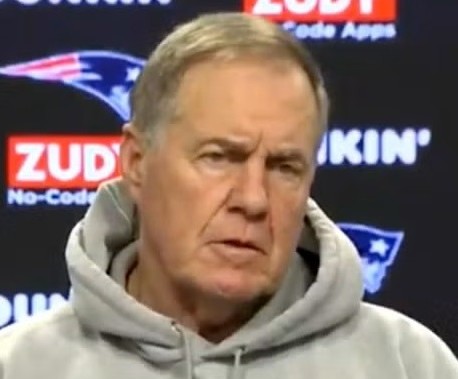
In 2021, the usually taciturn Bill Belichick delivered a masterclass on the evolution of special teams, and specifically the long snapper role, in response to a reporter’s question.
The kicking game remained an afterthought on many clubs into the early 1980s. Despite pioneer special teams coordinators like Hall of Fame coaches Marv Levy and Dick Vermeil (both proteges of Allen), the league was slow to adapt. According to Rick Gosselin, as late as 1985, only 12 out of the 28 teams had dedicated coaches. However, soon after, emphasis on the third phase accelerated rapidly; by 1989, there was even a “Special Teams Coach of the Year” award.
As Gosselin noted, “Football is a game of field position. The NFL finally realized that the biggest chunks of yardage are exchanged on the kicking downs. So teams [began] treating special teams like they [were] a third of the game—equal partners of the offense and defense.”
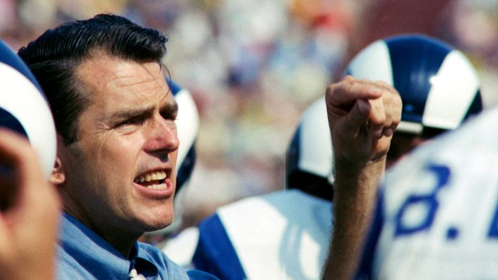
George Allen, Photo courtesy of Los Angeles Rams
Greater focus on special teams, even without increased specialization, drove more strategy refinement, video review, and dedicated practice time, all of which naturally helped reduce errors. Consequently, the evolution in the game’s third phase played a substantial role in inhibiting singletons over the final quarter of our study.
The Multi-Singleton Player Paradox
Beyond environmental factors like weather and field conditions, another crucial enabler of singletons was, of course, the personnel on the field. The data shows that successful run and pass conversions are heavily weighted toward repeat performers. Filtering out Frankie Albert’s three premeditated fakes leaves 42 singletons born of a miscue. The remaining eight multi-singleton players were thus involved in 40% (17 of 42) of occurrences.
This significant proportion presents a fascinating statistical paradox: if the singleton is truly a product of unpredictable chaos, how did it happen to the same players so many times?
- Better coaching
- Plain ol’ luck
- Physical and mental abilities
Coaching seems like a logical piece in solving the puzzle, but it does not fit. While tactics like the “fire” call were standard throughout the league in our timespan, that was about the limits of special teams coaching. By the time dedicated coaching came to the kicking game, it was focused on preventing the errors that led to singletons, not on capitalizing on them once a play broke down.
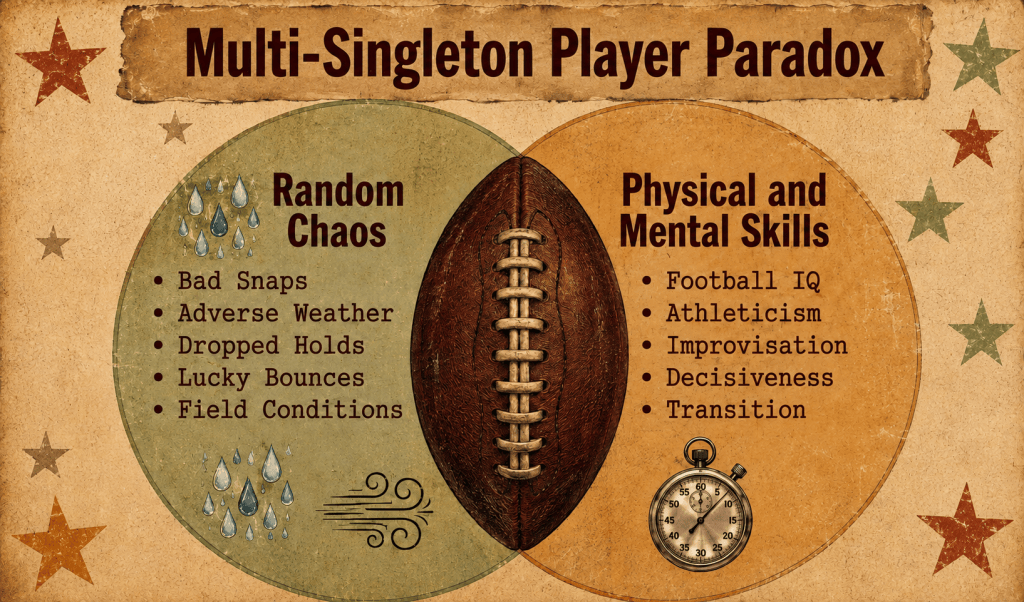
Our earlier analysis showed that the singleton’s historical distribution is highly volatile, with a feast-or-famine rhythm. Since the data demonstrated this randomness on a macro level across the league, it is reasonable to conclude that similar forces were in play on a micro level, unpredictably distributing opportunities among individual players. Ultimately, luck was certainly a key ingredient for repeat performers, such as dictating which players were confronted with off-target snaps or whether the football takes a convenient high bounce that allowed the holder or kicker to easily gather it and make a play.
However, getting lucky after a chaotic snap or hold is not sufficient to explain the high percentage of multi-singleton players. They were not simply the passive beneficiaries of a random statistical burst; they had to possess a specific skill set that allowed them to tilt the odds when bedlam broke out. This brings us to the other potential factor – physical and mental abilities. Three traits stand out among these repeat performers, helping them turn conversion chaos into opportunity:
- Improvisational Athleticism – If any player was built for the singleton, it was Douglass. His raw athletic ability and freewheeling style were tailor-made for broken plays, allowing him to thrive in the mayhem. His run of singletons over a short timeframe showed just how well those skills matched the demands of a busted extra point.
- Split-second Diagnosis – Rapid processing undoubtedly helped players like Largent to immediately make the right decision after a botched snap, whether to place the ball or find an open lane.
- Elite Transition Skills – Defensive playmakers such as Butkus and Wehrli possessed razor-sharp transition instincts, honed on fumble and interception returns. They were naturally accustomed to playing off-script, immediately shifting into attack mode.
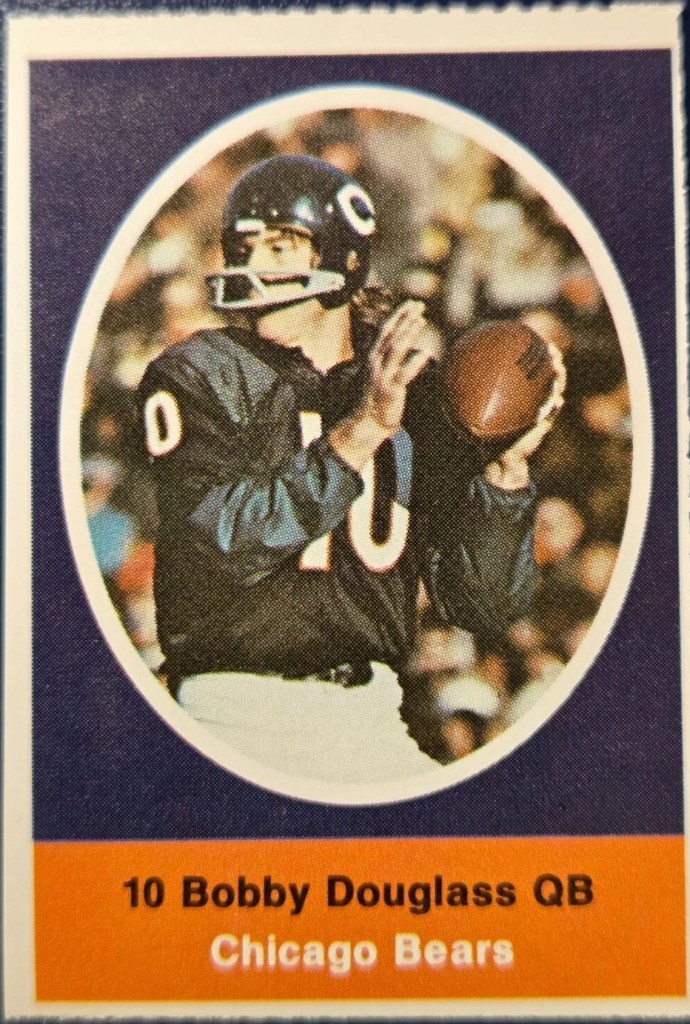
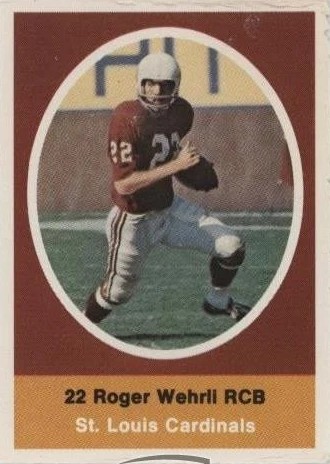
Solving this paradox points to the reality that the multi-singleton player phenomenon required both sublime randomness and specific football skills. While execution failures and pure chance created the opportunity, capitalizing on it multiple times required a player with unique tools. Douglass perfectly summarized this dynamic: “It was lucky, sure, but you have to do the right thing even when you get lucky.”
One Final Point
The singleton captures a distinctive and memorable time in NFL history. It was one of the sport’s most fun sequences to watch: the typically mundane extra point is blown apart by a bad snap or a dropped hold and turned into instant high drama.
Every unscripted conversion run or pass required the intersection of an error, luck, and improvisational skill. Best of all, it often included players performing outside of their normal roles – nothing quite matched the sight of a linebacker or defensive lineman catching a conversion pass.
As rosters expanded, player roles became more specialized, and special-teams preparation modernized. This increased polish squeezed out the era’s typical third-phase sloppiness, costing the league a bit of its wild, unscripted charm. Ultimately, these rare conversions and the exceptional athleticism of the players who could capitalize on them offer a window into the evolution of the NFL in the latter half of the 20th century, one broken play at a time.
Author’s Note: If you are aware of any additional singletons, video footage, insights on Charlie Conerly’s scoring plays, or historical errors, please reach out to the author at tim@timcastelli.net.
Data Note: Pro Football Reference’s database was used to extract detailed NFL touchdown data for the 1950-1993 seasons in February 2025 and compile specific scoring-play totals in August 2026. Because these historical records are continuously updated, the numbers may slightly fluctuate over time.
Acknowledgements
After initially compiling this dataset, I came across a 2017 article by a researcher at QuirkyResearch.com covering a slightly different scope. It listed extra points by pass or rush between 1970 and 1993, and non-specialists who made extra-point kicks between 1970 and 2021. Even though our overall research focus differed, comparing our results for extra points by pass or rush served as an independent validation, as our datasets for those 24 seasons matched perfectly.
Thank you to the Professional Football Researchers Association (PFRA) Forum, especially Bob Gill, along with other members who provided information on Frankie Albert and other players. Also, the PFRA’s LineScores and GameBooks repositories were indispensable. I am equally grateful to The Pro Football Hall of Fame in Canton, Ohio, for their assistance.
Sources
Acton, Jay. The Forgettables. Thomas Y. Crowell, 1973.
Conerly, Charlie. The Forward Pass. Dutton, 1960.
Conerly, Perian. Backseat Quarterback. Doubleday, 1963.
Freedman, Lew. Chuckin’ Charlie Conerly and the New York Football Giants. McFarland, 2023.
Kashatus, William. Blue-Eyed Soul Brother: The Versatile Football Life of Super Bill Bradley. University of Nebraska Press, 2024.
Taleb, Nassim Nicholas. Fooled by Randomness. Random House, 2001. (Part 9, “Professor Pearson Goes to Monte Carlo (Literally): Randomness Does Not Look Random!”, p. 169).
Tittle, Y.A. I Pass! My Story. Franklin Watts, 1964.
Explore the Singleton Project
Video | Infographic | Dataset

